ChatGPT Pencil Sketch Photo Prompts
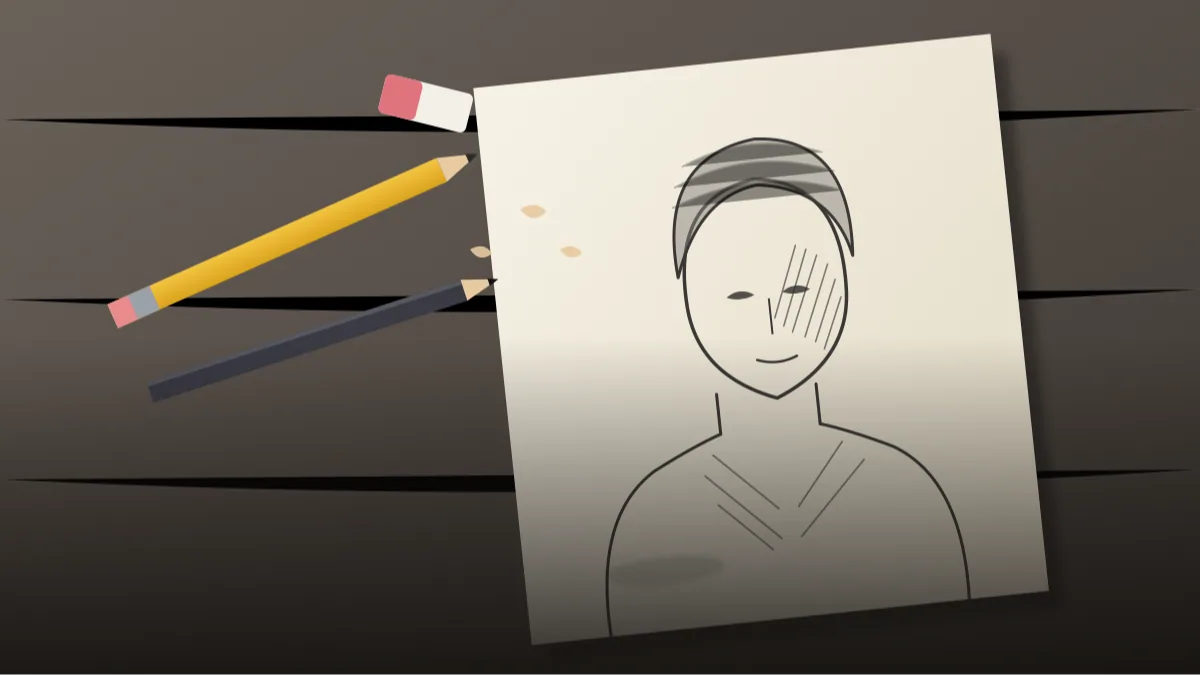 CHATGPT PROMPTSPENCIL SKETCH8 COPY-PASTE PROMPTS
There is something calm about a pencil drawing. Soft shading, visible strokes, the grain of paper. A good pencil sketch prompt can give your photo that look in seconds, without the filter-like flatness of a basic app effect.
The secret is to describe the tool and the paper, not just the word 'sketch'. Graphite behaves differently from charcoal, and colour pencils behave differently from ink. We also tell ChatGPT to keep the face recognisable.
Upload your own photo, and expect small differences each time you generate.
- Copy-Paste Prompts
- Your first pencil sketch prompt: what to upload and what to judge
- Small details that make a drawing look hand-made
- Why your pencil sketch prompt gives a grey filter instead of a drawing
- Does it look hand-drawn? Checking your pencil sketch prompt result
- Picking the right photo for a graphite portrait AI result
- Selfie to sketchbook page in two messages
- What AI pencil sketches still do badly
- FAQs
Copy-Paste Prompts: Pencil Sketch Prompt (8 Ready Ideas)
1. Soft graphite portrait
Convert the attached photo of me into a realistic graphite pencil portrait.
FACE: Keep my likeness, expression and hairstyle.
TECHNIQUE: Smooth blended shading, fine hair lines, sharp eyes.
PAPER: Off-white cartridge paper with subtle grain.
BACKGROUND: Fade into blank paper at the edges.
LIGHT: Soft side light from the left, gentle shadow on the right cheek, clean white paper highlights in the eyes.
AVOID: Colour, digital gloss, text.
Fading into blank paper is how real portrait sketches finish.
2. Dramatic charcoal
Turn the attached photo into a charcoal drawing.
TECHNIQUE: Bold smudged shadows, strong contrast, a few smeared edges.
FACE: Keep it recognisable with detailed eyes.
PAPER: Textured grey-toned paper with white chalk highlights.
MOOD: Dramatic, expressive, like a quick studio drawing made in one sitting.
DETAIL: Darkest tones in the hair and under the jaw, a few visible finger smudges near the edges.
AVOID: Colour, clean digital lines, text.
A toned paper with chalk highlights adds depth quickly.
3. Fine line art
Convert the attached photo into a clean continuous-line pencil drawing.
LINES: Thin, confident strokes, minimal shading.
FACE: Capture my main features and hair outline.
PAPER: Plain white.
COMPOSITION: Head and shoulders, centred, generous blank margin around the drawing.
DETAIL: Slightly varying line weight, a few open gaps in the outline, no filled-in dark areas.
AVOID: Heavy shading, colour, text.
Simple line art looks elegant and prints well on cards.
4. Colour pencil portrait
Redraw the attached photo as a colour pencil drawing.
TECHNIQUE: Layered strokes, visible directional hatching, soft colour blends.
KEEP: My face, skin tone, hair colour and outfit colours.
PAPER: Cream drawing paper with tooth texture.
BACKGROUND: Light unfinished colour wash at the edges, a few loose pencil strokes in a softer shade.
LIGHT: Warm natural light, soft shadows under the chin and along the nose.
AVOID: Digital smoothness, text.
Mention 'visible hatching' for a hand-made feel.
5. Sketchbook page
Show the attached photo as a quick pencil sketch on a sketchbook page.
STYLE: Loose lines, construction marks, light smudges.
PAGE: Spiral-bound notebook paper with a corner of a pencil visible.
KEEP: Face recognisable.
LIGHT: Soft desk light from above-left, slight shadow on the page, warm tone.
CAMERA: Top-down view, page slightly tilted, shallow depth of field on the corners.
AVOID: Perfect lines, text.
A staged page makes a great social media picture.
6. Architectural pencil sketch
Convert the attached photo of a building into an architectural pencil sketch.
TECHNIQUE: Precise straight lines, light hatching for shadows, perspective guidelines.
PAPER: White drawing paper.
DETAIL: Window frames, bricks suggested by light marks only, doors and railings drawn with a ruler-straight line.
PERSPECTIVE: Keep the original viewpoint, with faint vanishing-point guidelines left visible.
AVOID: Colour, people, text.
Works for houses, temples and street corners. Straight lines need a clear original photo.
7. Couple sketch gift
Turn the attached couple photo into a graphite sketch, shared with both people's consent.
KEEP: Both faces, hairstyles and the pose recognisable.
TECHNIQUE: Soft blended shading, fine detail on eyes.
PAPER: Warm ivory with a thin hand-drawn border and a clear empty strip at the bottom.
COMPOSITION: Both people close together, shoulders touching, same scale, nothing cropped.
AVOID: Colour, changing faces, text.
A good print and frame gift. Check both likenesses before printing.
8. Pet pencil portrait
Create a detailed pencil portrait of the pet in the attached photo.
TECHNIQUE: Fine fur strokes, bright glints in the eyes, soft shading under the chin.
PAPER: White paper, edges fading into blank space.
KEEP: Markings and ear shape exactly, plus the pet's usual head tilt.
LIGHT: Soft window light with a gentle shadow under the chin and one tiny bright reflection in each eye.
AVOID: Colour, backgrounds, text.
Pets are forgiving subjects, and people love them as gifts.
Your first pencil sketch prompt: what to upload and what to judge
Pick a photo with clear light and a plain background. A window-lit selfie taken in the afternoon is perfect. Upload it, paste the prompt and send. Judge the result on the eyes first, because eyes carry likeness in a drawing more than anything else.
If the face feels slightly off, ask for another pass with 'sharper eyes, softer shading on cheeks' instead of starting a brand new chat. ChatGPT keeps the drawing in mind and tweaks it, so each follow-up gets closer.
Do not expect a museum drawing on the first go. Think of it as a rough study that you refine with two or three short replies.
Do not expect a museum drawing on the first go. Think of it as a rough study that you refine with two or three short replies.
Small details that make a drawing look hand-made
Real sketches are imperfect, and that is exactly what people like about them. When your prompt asks for perfection, the result comes back looking like a photo filter. A few honest imperfections do the opposite.
Mention the pencil grade, for example a soft 4B for dark shadows and a hard 2H for fine lines. It also helps to say where the drawing should stop: loose strokes fading out near the shoulders instead of a fully shaded rectangle.
- Name the tool: graphite, charcoal, colour pencil.
- Describe the paper and its colour.
- Let the drawing fade into blank paper.
- Add a few smudges or construction lines.
- Avoid asking for photo-perfect results.
Why your pencil sketch prompt gives a grey filter instead of a drawing
The most common mistake is just writing 'make this a sketch'. The result often looks like a grey filter laid on top of the photo. Name the technique, the paper and the finish: 'soft graphite on cream sketch paper, visible hatching, bare paper highlights'.
If the face changes, ask ChatGPT to keep the likeness and reduce stylisation. For printing, request a plain background so you can place the drawing in a frame without cropping the shoulders.
Another quick fix is to ask for 'hatching and cross-hatching visible in the shadows'. Those little lines are what make people believe a hand made it.
Another quick fix is to ask for 'hatching and cross-hatching visible in the shadows'. Those little lines are what make people believe a hand made it.
Does it look hand-drawn? Checking your pencil sketch prompt result
Before you save the picture, look at it the way an art teacher would. Start with the eyes, then the edges of the hair, then the paper. In a believable drawing the darkest darks sit in the pupils, under the nose, and in the hair near the neck. If the whole face is evenly grey, the shading has been applied like a filter and not like a hand-made drawing.
Check the highlights too. A real graphite portrait leaves small spots of bare paper in the eyes, on the tip of the nose and on the upper lip. If those spots are filled with grey, ask for 'clean white paper highlights in the eyes and on the nose'. Ears, necklines and shirt collars are the places where AI tends to get lazy, so zoom in on them as well.
Finally, look at where the drawing ends. Hand sketches rarely fill the page edge to edge. They fade out around the shoulders with a few loose lines. If ChatGPT gives you a hard rectangular border and a full background, request 'unfinished edges that fade into blank paper' and try again.
Picking the right photo for a graphite portrait AI result
A graphite portrait ai result is only as good as the light in your original photo. Window light from one side, with a soft shadow on the other cheek, gives the model natural places to put shading. A photo taken with a phone flash looks flat, and the sketch will look flat too.
Keep the face at least a third of the frame height and make sure both eyes are open and sharp. Glasses are fine, but strong glare on the lenses turns into odd white patches in the drawing. If you wear a cap or have hair across one eye, say so in the prompt, otherwise ChatGPT may quietly 'fix' it and change your look.
For the charcoal drawing from photo prompt style, a side-lit photo with a darker background works best because charcoal loves big shadow shapes. For the line art portrait prompt, do the opposite. Pick a bright, evenly lit photo with a clean outline of hair and shoulders, since there is no shading to hide mistakes.
Selfie to sketchbook page in two messages
Let us take the 'Sketchbook page' pencil sketch prompt and adapt it for a normal selfie. First, crop the selfie so your head and shoulders fill most of the frame. Second, upload it and paste the prompt as it is. Third, read the result and note one thing you dislike. Maybe the pencil in the corner looks too new, or the smudges are too heavy.
Now send a follow-up in the same chat, for example: 'Keep everything, but make the lines looser, add two faint construction circles around the head, and show a used, sharpened pencil.' Small, single-purpose follow-ups work better than rewriting the whole prompt, because ChatGPT remembers the face it already drew.
If you want a gift instead of a social post, swap the page for 'warm ivory card stock with a thin pencil border' and ask for a hand drawn sketch effect for photos that leaves space at the bottom for a handwritten name. You can then add the name yourself in any editor, which is more reliable than asking AI to write text.
Sketches suit framed gifts, profile pictures, wedding cards and remembrance portraits. A convert photo to pencil sketch chatgpt routine like this one prints best on matte paper, which gives the most natural feel.
What AI pencil sketches still do badly
Be honest with yourself about the limits. Fingers and hands drawn in pencil often come out with the wrong number of knuckles, so crop to the shoulders when you can. Fine jewellery, bindis, mangalsutra chains and printed patterns on clothes get simplified or changed. Text on a t-shirt will almost always be garbled.
Likeness can drift between attempts. If the first result is close, do not keep regenerating from scratch. Ask for small changes instead. And remember that a sketch of a private photo, especially of children or another person, should only be made and shared with their permission.
Frequently Asked Questions
What is the best photo for a pencil sketch?
A sharp, evenly lit photo with clear facial features and a simple background. Strong shadows can look dramatic, but avoid harsh glare.
Can I get a transparent background?
Not usually. Ask for plain white paper and remove it in an editor if you need transparency.
Will it look like a real drawing?
Close, if you describe the materials and imperfections. It is still a digital image, so printing on textured paper helps.
Why do the eyes look off?
Eyes are hard to render. Ask for 'sharper, accurate eyes' and retry.
Which style is the easiest to get right the first time?
Soft graphite and fine line art are the most forgiving, because they do not depend on heavy shadows. Charcoal and colour pencil need a good photo, so try them after you have seen how your face behaves in graphite. A graphite portrait ai attempt also tells you quickly whether the likeness is holding.
Can I sketch someone else's photo?
Only with their permission, especially for gifts or sharing online.
Final Thoughts
A thoughtful pencil sketch prompt names the tool, the paper and the mood, and lets the likeness stay yours. Start with graphite, then explore charcoal and colour pencil.
Pick one clear, window-lit photo of yourself, run the graphite prompt first, and only then try the sketchbook page. If you enjoy the hand-made look, other art-style prompts on Tech Boi Prompt are a natural next experiment.
Note: AI image and text results vary by tool, version and settings. Use only your own photos, avoid copying real people’s likeness, and follow the terms of the AI tool you use.