Hindu Groom Sherwani and Safa Portrait AI Prompts
 AI PHOTO PROMPTSHINDU GROOM SHERWANI SAFA8 COPY-PASTE PROMPTS
Ask any groom what he remembers about his wedding day, and half the answers are about the clothes. The weight of the sherwani, the safa that took three people to tie, the kalgi pinned at just the right angle. Yet most grooms end up with only a few stiff photos taken in a hurry. A well-written hindu groom sherwani prompt gives you a second chance to get the portrait you imagined, using your own photo as the base.
In this collection we keep things simple and respectful. You attach your own picture, tell the AI to keep your face unchanged, and describe the sherwani, safa, stole and setting in plain words. Poses are calm and confident: standing tall, adjusting a cuff, a quiet smile at the camera. Nothing flashy, and nothing that would feel out of place in a family album.
Wedding customs change from home to home. Some families prefer a pagri, some a safa, some a simple turban or nothing on the head at all. Read each prompt and change the words to suit your tradition, and remember AI results need a retry now and then.
- Copy-Paste Prompts
- Which photo works best for a hindu groom sherwani prompt?
- Ivory, maroon or sage? Colour and fabric for your hindu groom sherwani prompt
- Safa, stole and the small details that get distorted
- Making a sherwani photo edit with ai look photographed, not painted
- Checking fabric, fit and symmetry like a tailor would
- One ivory portrait, three weddings: day, evening and minimal
- Invites, status and printed frames: using the portrait well
- FAQs
Copy-Paste Prompts: Hindu Groom Sherwani Prompt (8 Ready Ideas)
1. Ivory Sherwani Studio Portrait
SUBJECT: my attached photo, adult groom, face unchanged.
OUTFIT: ivory silk sherwani with subtle gold thread work, a maroon stole over one shoulder, pearl buttons, a matching safa with a small brooch.
SETTING: plain warm grey studio backdrop.
POSE: standing straight, hands relaxed, calm confident look.
LIGHT: soft two-light studio setup.
CAMERA: 85mm, knee-up, f/2.8.
AVOID: heavy filters, extra jewellery, text.
A clean backdrop is the safest way to see how the sherwani details come out. Add 'natural skin texture' if the face looks plastic.
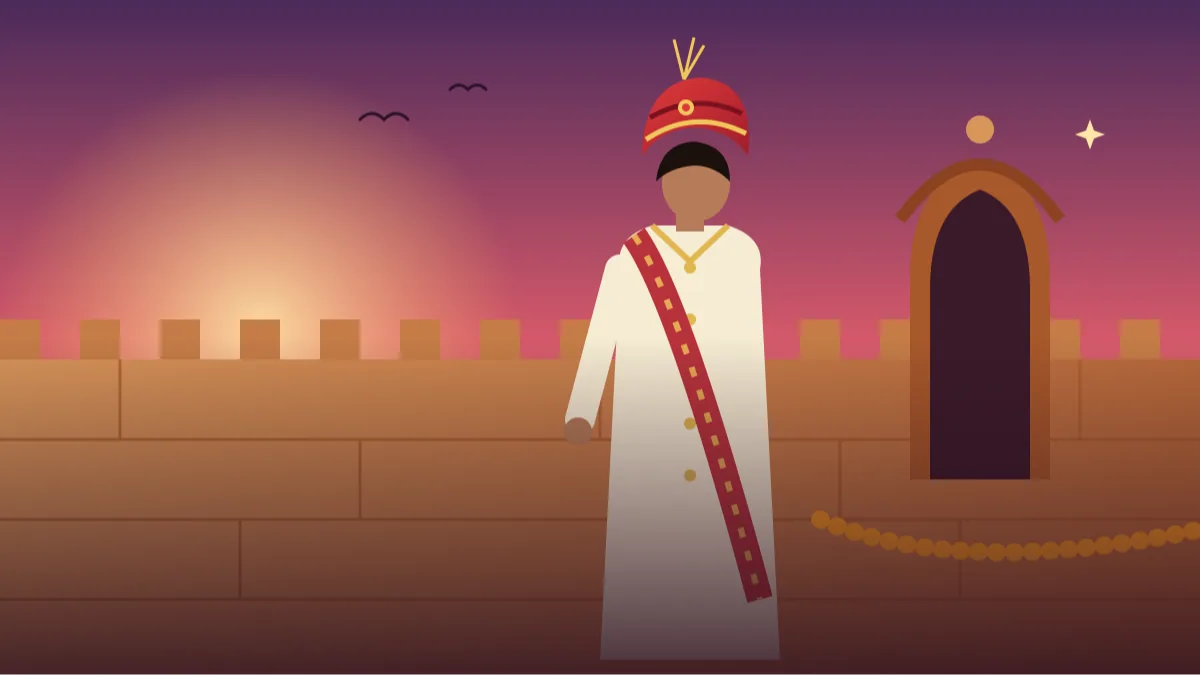
2. Red Safa Close Portrait
SUBJECT: my attached photo, groom, face unchanged.
OUTFIT: cream sherwani with a rich red Rajasthani safa, a pearl-and-gold kalgi pin, a thin gold chain, a printed dupatta.
SETTING: sandstone wall in warm evening light, soft blur behind.
POSE: head slightly turned, eyes to camera, quiet smile.
LIGHT: golden hour side light.
CAMERA: 100mm, tight chest-up.
STYLE: sharp, rich colour.
AVOID: crooked turban, text.
Turbans can fold strangely. Ask for 'neatly tied, symmetrical safa' if the first try looks lopsided.
3. Palace Entry Walk
SUBJECT: my attached photo, groom, face unchanged.
OUTFIT: royal blue velvet sherwani with silver embroidery, ivory churidar, a white safa and a pearl mala.
SETTING: a long palace corridor with arches, lanterns and a few blurred marigold garlands.
POSE: walking slowly toward the camera, one hand lightly on his sherwani.
LIGHT: warm lantern light with soft shadow.
CAMERA: 35mm, full body, slightly low angle.
AVOID: people in the frame, distorted feet.
Walking shots feel cinematic. If the feet bend, switch to a standing pose.
4. Adjusting the Cufflink Detail
SUBJECT: my attached photo, groom, face unchanged and visible.
OUTFIT: black bandhgala with fine gold buttons, a white pocket square, an engraved watch, a small brooch.
SETTING: a quiet dressing room with a wooden mirror and soft curtains.
POSE: looking down, adjusting a cuff, a gentle smile.
LIGHT: window light from the right.
CAMERA: 70mm, three-quarter, shallow depth of field.
STYLE: documentary, calm.
AVOID: extra fingers, brand names.
This 'getting ready' frame suits an album opening page. Hands near the cuff may need one retry.
5. Pastel Sherwani Garden Look
SUBJECT: my attached photo, groom, face unchanged.
OUTFIT: pastel sage green sherwani with light gold border, ivory stole, tan juttis, a thin floral kalgi on the safa.
SETTING: a garden lawn with white flowers, string lights and soft bokeh.
POSE: sitting casually on a carved bench, one hand on the knee, relaxed smile.
LIGHT: dusk with warm fairy lights.
CAMERA: 50mm, full length, f/2.
AVOID: harsh flash, extra people.
Pastels are very popular for day weddings. Use 'wedding sherwani colour ideas' like dusty rose or powder blue if sage does not suit you.
6. Baraat Horse Portrait, Respectful and Calm
SUBJECT: my attached photo, adult groom, face unchanged.
OUTFIT: golden sherwani, red safa with a sehra of fresh flowers, a thin stole.
SETTING: a decorated white horse standing in a calm street with marigold strings and softly blurred family far away.
POSE: seated upright, one hand on the reins, serious happy expression.
LIGHT: late afternoon sun.
CAMERA: 70mm, three-quarter.
AVOID: crowds in focus, animal distress, text.
Horse shots can look odd, so keep the horse calm and in the background. If the sehra hides your face, ask for it to be lifted.
7. Haveli Balcony Evening
SUBJECT: my attached photo, groom, face unchanged.
OUTFIT: deep maroon sherwani with gold buttons, cream stole, a short pearl necklace, a matching safa.
SETTING: a heritage haveli balcony at dusk with stone arches and glowing lamps.
POSE: standing at the railing, one hand on it, looking toward the camera.
LIGHT: soft blue-hour glow with warm lamp fill.
CAMERA: 35mm, symmetrical frame.
STYLE: editorial, calm.
AVOID: modern signs, warped railings.
Deep maroon looks strong against stone. Ask for 'straight railings' if the lines bend.
8. Reception Black Sherwani
SUBJECT: my attached photo, groom, face unchanged.
OUTFIT: black sherwani with a champagne gold collar, a gold lapel brooch, a white pocket square and polished black shoes.
SETTING: a reception stage with white roses and warm lights, a sheer curtain behind.
POSE: standing with arms relaxed, a calm composed smile.
LIGHT: soft stage light, gentle shine on shoulders.
CAMERA: 50mm, knee-up.
AVOID: harsh flash, shiny skin, text.
Black looks sharp but can crush detail. Ask for 'visible fabric texture' if the outfit looks flat.
Which photo works best for a hindu groom sherwani prompt?
For this hindu groom sherwani prompt, pick a photo where your face is clear, front-facing and in even light. A picture with your head covered by a cap or heavy shadow gives weaker results. Open Gemini or ChatGPT, choose image creation, attach the photo and paste the prompt in full.
Look at the first result and judge three things: face, hands and the safa. Ask for a single fix at a time. For example, 'keep the same image but make the sherwani one shade lighter'. When you are happy, download it and try another prompt for variety.
Ivory, maroon or sage? Colour and fabric for your hindu groom sherwani prompt
Colour and fabric are the two words that change a hindu groom sherwani prompt the most. Ivory, cream and gold are timeless, deep maroon and royal blue feel rich, and sage or powder blue suit a daytime wedding. Name the fabric too, for example silk, velvet or raw silk, since each reflects light differently.
A good rule is to keep one hero colour and one accent. A cream sherwani with a red safa, or a black one with a gold collar, looks planned and clean. Too many colours can make the AI muddle the details.
Safa, stole and the small details that get distorted
The groom safa portrait prompt works best when the head piece is described clearly. Mention the colour, the shape, such as a Rajasthani safa or a simple turban, and any pin or kalgi on it. Add 'neatly tied and symmetrical' to avoid the sagging look.
A stole, pocket square, brooch or mala can lift the outfit, but pick two at most. If you add four or five accessories, the face tends to get lost and the AI may put things in odd places.
Making a sherwani photo edit with ai look photographed, not painted
If you want a believable sherwani photo edit with ai, ask for natural skin and a matte finish, not glossy skin. Mention the light direction, such as 'window light from the right', and a focal length like 50mm or 85mm. These two details make the result look photographed, not painted.
Keep your expression honest. A small smile looks better than a big grin in a formal groom portrait, and it also helps the AI keep your face closer to the original.
- Use a front-facing, well-lit source photo.
- Name one hero colour and one accent.
- Say 'faces unchanged' near the start of the prompt.
- Keep the background simple.
- Retry once or twice before changing the whole prompt.
Checking fabric, fit and symmetry like a tailor would
A sherwani is a structured garment, so errors in it are easy to notice even when the face is perfect. After the first result of your hindu groom sherwani prompt, look at the outfit like a tailor would. Start at the collar: a mandarin collar should sit snug and even, with no gap on one side. Follow the front placket down: buttons should be evenly spaced and the closing line straight, not drifting toward one hip.
Check the shoulders and sleeves. A sherwani has a clean shoulder line; if one sleeve looks longer or the shoulders slope unevenly, ask for 'symmetrical, well-fitted shoulders and sleeves ending at the wrist'. Look at the embroidery. Zardozi or thread patterns should repeat in a believable rhythm along the border. If the pattern melts into noise, simplify with 'tone-on-tone embroidery, subtle' instead of heavy work.
Then the safa. The folds should wrap around evenly, and the top should look neat, with the kalgi or brooch centred if you asked for one. Finally, check the hands and cuffs. Fingers should be natural, and the cufflink or sleeve edge should be visible but not overdone. If anything bothers you, say it in plain words in a follow-up and change only that part.
One ivory portrait, three weddings: day, evening and minimal
Take the first prompt, the ivory studio portrait, and make it fit different weddings. For a daytime ceremony, write 'ivory raw silk sherwani with fine gold thread border, pastel peach safa, soft window light from the right, light cream wall'. The pastel safa against cream feels fresh and calm.
For an evening reception style, switch the colours: 'deep maroon velvet sherwani, gold buttons, matching plain stole, dark warm background, soft rim light on the shoulders'. Velvet reflects light differently, so the AI gives deeper folds and a richer look. For a modern, minimal groom, try 'sage green sherwani, no safa, simple brooch, light grey backdrop, relaxed smile'.
Each version changes three things: the colour, the fabric and the background. The instructions about your face and natural skin stay exactly the same. If you want a sherwani photo edit with ai that looks closer to a real studio, add the lens and distance, such as '85mm, chest-up, soft shallow depth of field'.
Rituals and outfits differ across families and regions. Some grooms wear a pagri, a turban or no head covering; some add a mala or a shawl. Describe your own family's style rather than copying a generic one, and do not include religious figures or images in the frame. The picture is about you and your clothes.
Invites, status and printed frames: using the portrait well
Think about where the picture will go. For a printed frame at home, ask for a portrait orientation and an uncluttered background so nothing gets cropped. For a WhatsApp or Instagram story, request 9:16 with 'extra space above the head'. For a digital invite, a head-and-shoulders crop with a plain colour behind you is easiest to place text on.
Short captions suit these pictures: 'Ready for the big day', 'Dressed in blessings' or 'Two families, one celebration'.
If you will be sharing widely, tell people it is AI-edited. Relatives may assume a real photoshoot, and saying so avoids awkward moments. Do not use the pictures as your only wedding photographs; a good photographer captures the real ceremony, the family and the atmosphere, which no prompt can recreate.
A last honest note. AI sometimes tidies your face, smooths your skin or changes beard shape. If you look like a different person, the portrait loses its point. Retry with 'keep my exact face, beard and hairstyle', or use a sharper source photo. A groom safa portrait prompt works best when you treat it as a styling preview, a way to try colours before you commit, and then let the real tailor and the real day do the rest.
Frequently Asked Questions
Can I use these prompts if I do not wear a safa?
Yes. Delete the safa words and write 'bare head with neat hair' or whatever your family follows. The rest of the outfit and setting lines still work well.
Why does my sherwani pattern look blurry?
Fine embroidery is hard for AI. Ask for 'subtle gold thread work' instead of detailed patterns, and use a closer crop so the fabric is easier to render.
Does an indian groom photo prompt for gemini work for ChatGPT too?
Yes, both tools read labelled lines clearly. An indian groom photo prompt for gemini may give a slightly different look in ChatGPT, so adjust the colours and framing after the first try.
Can I add a baraat scene?
You can, as in the horse prompt above. Keep the scene calm and the crowd far in the background, and describe it as a baraat groom ai photo with the family only softly blurred.
Will my face stay exactly the same?
Not always. Use a sharp front-facing photo, repeat that the face must stay unchanged and retry if the likeness drifts.
Final Thoughts
A groom portrait should feel like you on your best day, relaxed, proud and a little bit dressed up. Use a good photo, a clear hindu groom sherwani prompt and a calm setting, and the AI can give you a picture worth framing. Begin with the ivory studio portrait or the haveli balcony, then try a groom portrait prompt chatgpt style change with a new colour.
Before you order your real outfit, run the same portrait in two or three colours and show them to your family. If you are also planning pre-wedding pictures, our pre-wedding and couple photo prompts are a gentle place to continue.
Note: AI image and text results vary by tool, version and settings. Use only your own photos, avoid copying real people’s likeness, and follow the terms of the AI tool you use.