ChatGPT Watercolor Painting Photo Prompts
 CHATGPT PROMPTSWATERCOLOR PAINTING8 COPY-PASTE PROMPTS
Watercolour is all about softness: colours that bleed into each other, edges that disappear, and white paper shining through. A well-written watercolor prompt tells ChatGPT about washes, water control and paper texture, not only the word 'painting'.
We like to leave parts of the picture unfinished, just like real painters do. That makes the result feel hand-made. And when you use your own photo, we always ask to keep faces recognisable.
Run the same prompt two or three times. Watercolour is gloriously unpredictable, and the AI version is no different, so the third try is often the one you keep.
- Copy-Paste Prompts
- Which photo to upload for a watercolor prompt, and what to say after the first result
- Small habits that make AI paint feel like real watercolour
- Why does my watercolour look muddy, stiff or too sharp?
- Printing, gifting and posting your watercolour pictures
- How to tell a real watercolor look from an airbrushed fake
- Choosing a subject that suits a watercolor prompt
- Three variations to try with the same photo
- Printing, framing and sharing your painted pictures
- FAQs
Copy-Paste Prompts: Watercolor Prompt (8 Ready Ideas)
1. Loose portrait wash
Turn the attached photo of me into a loose watercolour portrait.
KEEP: Face recognisable, hair colour and clothing colours.
TECHNIQUE: Soft wet-on-wet washes, detailed eyes, unfinished edges.
PAPER: Cold-pressed paper texture with white areas left untouched.
PALETTE: Natural skin tones, a hint of blue in the shadows.
AVOID: Heavy outlines, digital gloss, text.
Leaving white areas untouched is the quickest way to look painted.
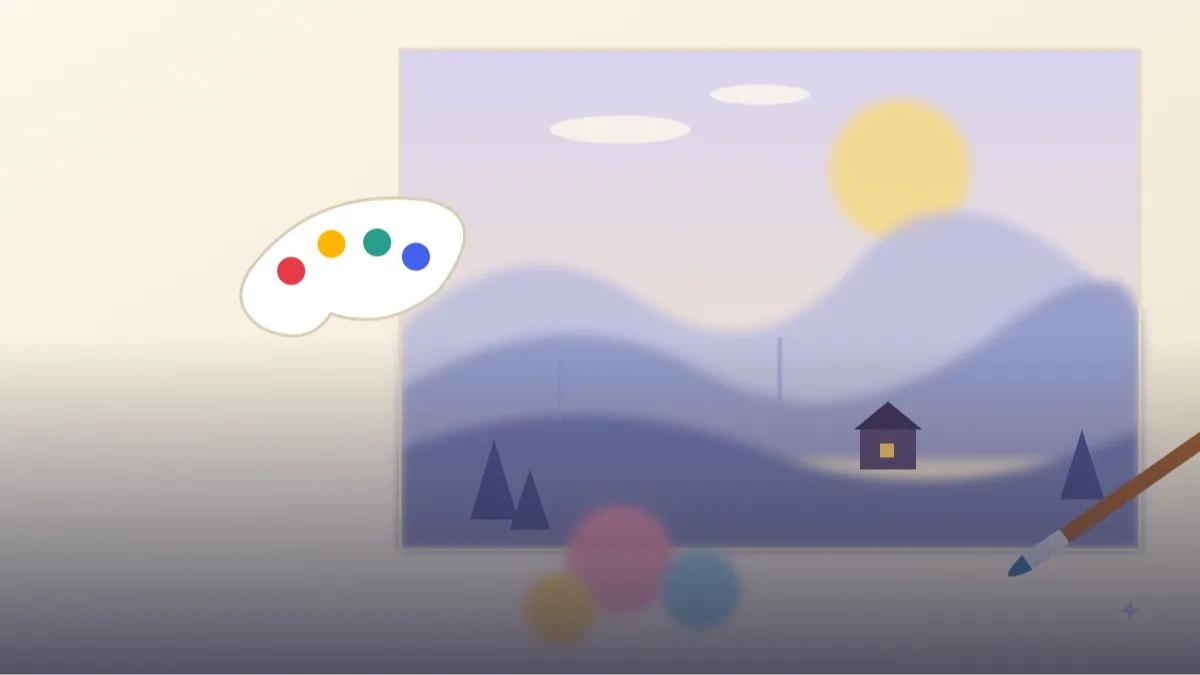
2. Misty mountain landscape
Paint a watercolour landscape of misty mountains at dawn.
TECHNIQUE: Layered transparent washes, each far ridge paler than the one in front, soft bleeding edges where cloud meets hill.
PALETTE: Blue-grey, lavender and pale gold only.
PAPER: Cold-pressed texture with visible grain and bare white gaps in the sky.
COMPOSITION: A tiny cabin with one warm lit window in the lower third, a few dark pine strokes beside it.
AVOID: Hard outlines, photo realism, text.
Fading into distance is where watercolour looks beautiful.
3. Flower bouquet
Paint a loose watercolour bouquet of [FLOWERS] in a plain glass jar.
TECHNIQUE: Colour dropped into wet paint so petals bleed softly, a few dark accents in the centres and under the leaves, one or two small splashes.
PALETTE: [COLOUR 1], [COLOUR 2] and fresh leaf greens.
PAPER: White textured paper with generous empty space around the jar.
AVOID: Outlines, background fill, text.
Accent darks make the soft colours look more skilled.
4. Pet watercolour
Create a watercolour portrait of the pet in the attached photo.
KEEP: Markings, ear shape, nose colour and eye colour exactly as in the photo.
TECHNIQUE: Wet washes for the fur, splashes of colour around the head, tiny sharp dark details in the eyes and nose so the face stays alive.
PAPER: Cream paper with visible grain, edges fading out.
AVOID: Heavy outlines, realistic photo look, text.
Paint splashes around the head give it a cheerful feel.
5. City street in rain
Turn the attached street photo into a watercolour painting on a rainy evening.
TECHNIQUE: Blurred wet reflections on the road, loose faceless figures, umbrellas as bright dots of colour.
PALETTE: Grey-blue with warm yellow shop-window lights.
PAPER: Heavy texture, unpainted corners that fade into white.
COMPOSITION: Keep the original perspective of the street.
AVOID: Sharp detail, readable signboards, text.
Faceless figures keep the painterly mood and avoid awkward details.
6. Couple under tree
Transform the attached couple photo into a watercolour painting, shared with both people's consent.
KEEP: Faces, hairstyles and clothing colours recognisable.
SCENE: Soft blossoms and leaves around them, blurred green background washes.
TECHNIQUE: Gentle washes, subtle pencil lines in the faces only.
PAPER: White textured paper with deckled edges and plenty of unpainted margin.
AVOID: Heavy outlines, text.
Subtle pencil lines in faces help likeness without harming the soft look.
7. Food illustration
Create a watercolour illustration of [DISH] served on a plate.
TECHNIQUE: Juicy wet colours, white highlights left as bare paper on the glossy parts, loose ink outline in a few places only.
PALETTE: Warm natural food colours with a touch of green for garnish.
PAPER: White paper with a few paint splatters near the plate.
COMPOSITION: Top-down view with a wide margin.
AVOID: Photo realism, text.
Food watercolours suit recipe cards and cafe menus.
8. Home sketchbook scene
Turn the attached photo of my home corner into a watercolour sketchbook page.
TECHNIQUE: Loose ink lines with light washes, deliberately unfinished parts, tiny colour swatch notes in the margin.
PAPER: Sketchbook page with a pencil resting at the edge.
PALETTE: Muted warm colours, one accent colour for a plant or cushion.
AVOID: Perfect straight lines, text, people.
Great for home decor posts. Mention items you want emphasised.
Which photo to upload for a watercolor prompt, and what to say after the first result
Choose a photo with strong shapes and one clear light source. A window-lit face, a flower on a table or a hill with mist works far better than a cluttered shelf. Detailed clutter turns muddy in paint, so crop tight before you upload if the frame is busy.
Paste the prompt and send it. If the result looks too digital or too smooth, reply with 'more water bleeding, rougher paper grain, fewer outlines, leave some paper white'. If it looks too messy, say the opposite: 'keep the face clearer and the rest loose'. One reply, one change, and you will see exactly which words ChatGPT is following.
Small habits that make AI paint feel like real watercolour
The charm of watercolour is control and release: a few careful spots and a lot of happy accidents. Real painters never fill every inch, and your prompt should not either. Say 'leave bare white paper in the highlights' and ChatGPT will stop painting the whole page edge to edge.
Keep the palette small. Three or four colours plus one dark accent look far more professional than ten. Name the colours, for example 'burnt sienna, ultramarine and a touch of rose', rather than saying 'colourful'. And name the paper: cold-pressed gives gentle grain, rough paper gives stronger texture.
- Ask for white paper left unpainted.
- Request soft edges that fade out.
- Limit the palette to three or four named colours.
- Add a few darker accents on eyes, stems or shadows.
- Use paper words such as cold-pressed or rough.
Why does my watercolour look muddy, stiff or too sharp?
Muddy colours usually come from too many hues fighting in one picture. Cut the palette down and mention 'clean, transparent colours, no grey mixing'. A second problem is heavy dark outlines, which make the result look like a cartoon; ask for 'little to no outlines, edges formed by colour changes'.
If faces lose their likeness, add 'keep the face more detailed than the rest and keep the face recognisable'. And if everything looks airbrushed, ask for 'visible paper grain and uneven pigment', because a smooth gradient is the clearest sign of a fake watercolour.
Printing, gifting and posting your watercolour pictures
Print the results as wall art, greeting cards or journal covers. Your photo to watercolor painting chatgpt pictures also work well as soft website backgrounds, invitation cards and thank-you notes for relatives.
Use matte paper and a simple frame to complete the hand-made look. If you plan a gift for a parent or a friend, pick a photo with a happy memory, like a trip or a festival morning, and print it on 200 gsm paper. A small handwritten date in the corner makes it feel personal, and nobody will mind that the painting started as a photo.
How to tell a real watercolor look from an airbrushed fake
Before you judge the output, it helps to remember how a real watercolour sheet behaves. Pigment settles into the little dips of the paper, so you see slightly darker granulation in shadows. Colours touch each other and make soft third colours at the meeting line. Highlights are not painted white; they are simply the paper left alone. If your result has a flat, evenly lit sky with a smooth gradient and a hard white highlight, it is probably an airbrush look, not paint.
Check four things on every image. First, the edges: a few should be crisp where paint dried, and many should be lost in a wash. Second, the whites: eyes, petals or window glints should show bare paper. Third, the colour temperature: warm and cool patches should sit beside each other, for example a peach cheek and a blue-grey shadow under the chin. Fourth, the unfinished parts: a real painter stops early at the bottom of a coat or the edge of a hair strand. If everything is equally detailed, ask ChatGPT to 'finish only the face and leave the rest loose'.
For portraits, look at the eyes and mouth last. They should be the sharpest, darkest spots on the page. A good watercolour portrait ai result gives them a tiny bit of dark pigment and leaves cheeks, forehead and clothes as pale washes.
Choosing a subject that suits a watercolor prompt
Not every photo turns into a nice painting. Pictures with one clear light source and three or four big colour areas translate best. A tea cup by a window, a girl in a yellow kurta against a green wall, a boat on a river at sunrise: these work. A crowded family function with twenty faces, patterned sarees and fairy lights usually turns muddy, because there is too much to simplify.
If you love a busy photo anyway, crop it first. Take a tight crop of two people, or a single corner of the market, and paint only that. You can also tell ChatGPT what to drop: 'ignore the background crowd, paint only the two people in front, fade everything else into pale colour'.
For a loose watercolor landscape prompt, choose photos with layers: foreground rocks, a middle field, far hills, sky. Watercolourists love this because each layer can be a lighter wash than the one before it. Hill stations, lake photos and rice-field pictures from a village trip are perfect. Mid-day harsh photos with flat white sky need a note such as 'add a soft pale peach sky wash' so the painting does not look blank at the top.
Three variations to try with the same photo
One photo can give you three quite different pictures, just by changing two or three words. Take the loose portrait wash prompt above and try these.
Variation one, soft and dreamy: change the technique line to 'very wet washes, colours bleeding past the outline, pastel palette, pale peach and lilac'. This suits birthday cards, thank-you notes and gentle gift prints.
Variation two, ink and wash: write 'fine dark ink linework on face and hands, light watercolour fill, uncoloured background'. The pen lines keep likeness strong, so it is the safest choice if your earlier results lost the face.
Variation three, bold and saturated: write 'strong pigment, deep blues and magentas, visible brush strokes, dry-brush edges on the shirt'. This gives a poster-like look which works nicely for a profile picture or channel art.
Do not change everything at once. Change one line, see the difference, then change the next. It also teaches you which words ChatGPT really listens to.
Printing, framing and sharing your painted pictures
Digital watercolour looks best on paper. Ask for a portrait or square image, download the largest version, and print on matte or textured paper of 200 gsm or more. Glossy photo paper kills the painted feel. A plain white or light wood frame with a wide mount lets the unpainted edges breathe.
For Instagram, a square or 4:5 crop works well, and leaving some blank paper at the bottom gives you space for a small handwritten caption in your editing app. For watercolor art for home decor, print a set of three in the same palette, such as three different flowers in the same jar colour, and hang them in a row.
Be honest when you share. If you post it as your own hand-painted artwork, people may feel misled. A simple line such as 'made with AI from my photo' is friendly and keeps the trust of your followers.
Frequently Asked Questions
Can ChatGPT really paint in watercolour?
It makes images that imitate watercolour effects: soft washes, bleeding edges, paper grain. They are digital pictures, not real paint, but they print nicely and can look convincing when you ask for unpainted paper and loose edges.
Why does my picture look too sharp?
Ask for wet-on-wet washes, loose edges and less detail, and reduce the busy parts of the background. 'Soft pigment bleeding, no outlines' is a good starting line.
Which photos work best?
Simple compositions with one clear light source and bold shapes, like flowers, window-lit portraits, tea cups and layered landscapes. Crowded scenes with many faces or patterns tend to turn muddy.
Can I use it for decor?
Yes, for personal use. Check the tool's terms for commercial sales.
Can I get a transparent background?
Not directly. Ask for white paper and remove the background in an editor.
Final Thoughts
A good watercolor prompt gives ChatGPT the washes, the paper texture and the unfinished edges that make a painting feel alive. Start with the loose portrait, then try the misty landscape or a corner of your own kitchen.
Pick one photo today, run the same prompt three times, and keep the version with the happiest accident. If you enjoy hand-made looks, our other art-style photo prompts on Tech Boi Prompt pair nicely with these paintings.
Note: AI image and text results vary by tool, version and settings. Use only your own photos, avoid copying real people’s likeness, and follow the terms of the AI tool you use.