ChatGPT Interior Design Image Prompts
 CHATGPT PROMPTSINTERIOR DESIGN IMAGE8 COPY-PASTE PROMPTS
Choosing paint and furniture is stressful when you can only imagine the result. An organised interior design prompt lets you preview ideas: you upload a photo of your room or describe a new one, and ChatGPT shows a possible look.
We treat these images as inspiration, not blueprints. Sizes, prices and structural limits still need real measurements and professional advice. But for mood, palette and layout ideas, they are wonderfully helpful.
State the room size, style, colours and rough budget feel in your message. The more precise you are, the more useful the picture, and 'ten by twelve feet, rented, no drilling' tells ChatGPT more than ten adjectives.
- Copy-Paste Prompts
- Photographing your own room for an interior design prompt
- Materials, sizes and palette: details that make an interior design prompt believable
- Why does the room in the picture not look like my room?
- From pictures to a shopping list you can actually carry to the market
- Is the sofa real? How to check the finished room image
- Three small-budget variations of one interior design prompt
- Balcony and small apartment decor prompt tricks
- Honest limits of AI room design
- FAQs
Copy-Paste Prompts: Interior Design Prompt (8 Ready Ideas)
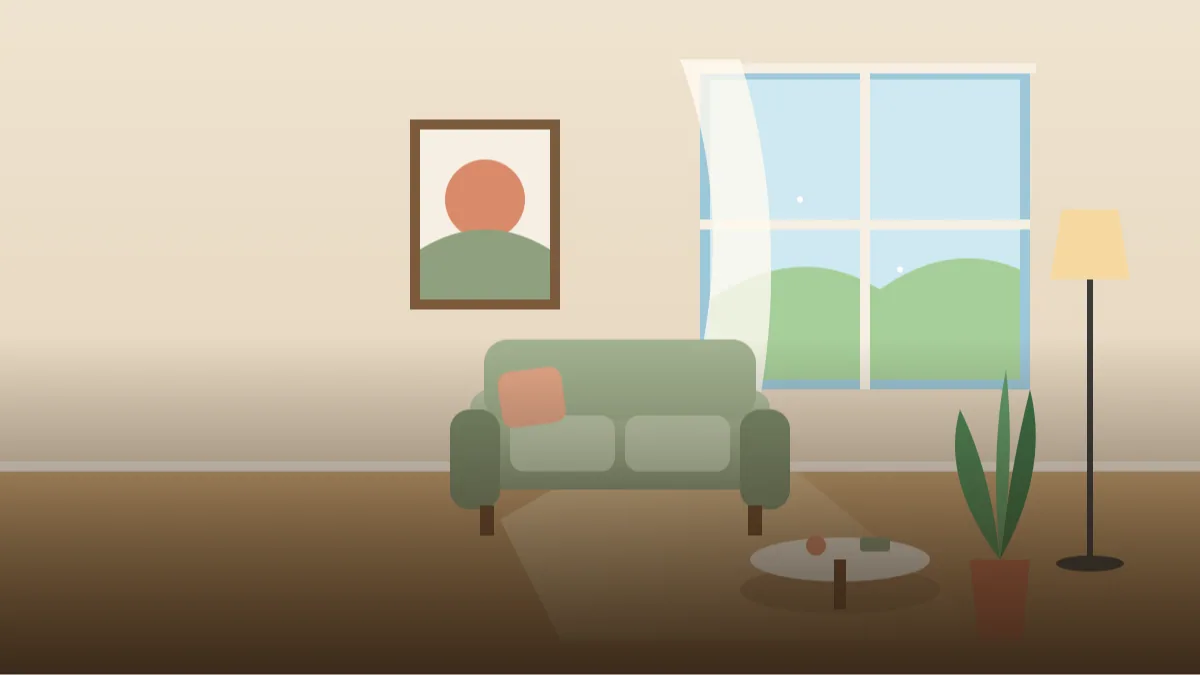
1. Small living room makeover
Redesign the attached photo of my small living room.
KEEP: Room shape, windows, doors and floor plan exactly.
STYLE: Warm minimal with light wood and soft beige.
FURNITURE: Compact two-seater sofa, round coffee table, wall shelf.
LIGHT: Natural daylight plus warm lamp.
DETAILS: One large plant, one framed art piece.
AVOID: Clutter, changing structure, text.
Telling it to keep walls and windows makes the makeover believable.
2. Calm bedroom
Create a realistic interior photo of a calm bedroom, about 12 by 12 feet.
STYLE: Japandi, low wooden bed, linen bedding in cream and sage.
LIGHT: Soft morning light through sheer curtains.
DETAILS: Paper lamp, bedside stool, a single plant.
CAMERA: Wide-angle 24mm from a corner.
AVOID: Heavy patterns, clutter, text.
Naming the room size keeps furniture in proportion.
3. Modern kitchen
Show a modern small kitchen in a [CITY] apartment.
LAYOUT: L-shaped with a breakfast counter.
MATERIALS: Matte white cabinets, wood-effect countertop, subtle backsplash tiles in [COLOUR].
DETAILS: Steel chimney hood, two stools at the counter, a small herb pot on the sill, clear counters with only a kettle.
LIGHT: Under-cabinet warm lights, daylight from a window.
CAMERA: Eye-level, 24mm.
AVOID: Brand logos, clutter, text.
Materials make the difference. Mention finishes like matte and wood-effect.
4. Balcony garden nook
Redesign the attached balcony photo into a cosy seating nook.
KEEP: Railing, floor and wall exactly.
ADD: Two folding chairs, a small side table, hanging planters, string lights.
PALETTE: Terracotta, green and cream.
TEXTURE: Jute mat on the floor, woven cushions, matte clay pots.
LIGHT: Evening glow with warm string lights switched on.
CAMERA: Eye-level 28mm from the doorway.
AVOID: Heavy structures, changing the view, text.
Light, movable items fit most rented balconies.
5. Home office corner
Create a realistic home office corner in a bedroom.
FURNITURE: Slim desk, ergonomic chair, floating shelves.
STYLE: Neutral palette with a dark green accent wall.
LIGHT: Window on the left, warm desk lamp.
DETAILS: Cable-free tidy setup, one plant, a corkboard with three plain notes, a small wooden desk organiser.
CAMERA: 35mm, slightly angled.
AVOID: Brand logos, clutter, text.
A single accent wall adds personality without the cost of a full repaint.
6. Kid's study room
Create a bright study and play room for a school-age child.
FURNITURE: Height-friendly desk, wall bookshelf, storage boxes, soft rug.
PALETTE: Light blue, white and yellow accents.
SAFETY: Rounded corners, no heavy items overhead.
LIGHT: Natural light plus a desk lamp.
DETAILS: A world map poster, a low reading corner with cushions, open toy shelf.
CAMERA: Wide-angle from the doorway.
AVOID: People, clutter, text.
No people in the picture; it is about furniture and layout.
7. Traditional meets modern
Show a living room mixing traditional Indian elements with modern lines.
DETAILS: Carved wooden chest as a coffee table, handloom cushions, brass lamp, clean grey sofa.
PALETTE: Warm neutrals with deep maroon and gold accents.
FLOOR: Pale stone tiles with a flat-weave dhurrie rug.
LIGHT: Soft daylight from a large window.
CAMERA: Eye-level 28mm.
AVOID: Religious idols, clutter, text.
Pick two or three traditional pieces; too many feels heavy.
8. Paint colour test
Using the attached photo of my room, show it with the walls painted in [COLOUR 1] and then in [COLOUR 2], side by side.
KEEP: Furniture, floor, curtains and lighting unchanged, same camera angle in both images.
FINISH: Matte, no gloss or glare on the wall.
NOTE: Colours should look natural in daylight, with shadows kept soft, and a small label under each image naming the shade.
AVOID: Changing furniture, text.
Always test real paint samples on the wall because screens cannot show true colour.
Photographing your own room for an interior design prompt
Take a straight-on photo in daylight with the whole wall visible and the floor showing. Switch off the harsh tube light and open the curtains, because a dark photo makes ChatGPT guess the colours. Clear away the clothes chair first; the tool will otherwise redecorate around it.
Upload the photo and say what must not change: walls, windows, doors, fan and AC position. Then describe style, colours and key furniture. Ask for two or three versions and compare them. Combining the best bits from each, say the lamp from one and the curtains from another, is part of the fun.
Materials, sizes and palette: details that make an interior design prompt believable
Specific materials and sizes help the AI produce rooms that look buildable. 'Oak veneer shelf, linen curtains, brass lamp' paints a clearer picture than 'modern luxury'. Give the room dimensions in feet if that is how you measure, and say how many people use the room.
Pick a palette of three colours and stick to it. Describe both day and evening light, because a warm lamp changes how a wall looks. And remember that real furniture has real measurements: a picture that shows a six-seater sofa in a small room is a nice image but not a plan.
- Mention room dimensions.
- Name materials: oak, linen, brass, terrazzo.
- Pick a palette of three colours.
- Describe lighting for day and evening.
- Remember that real furniture has real measurements.
Why does the room in the picture not look like my room?
The first reason is too many styles in one prompt. Boho, minimal, Scandinavian and industrial together give a confusing room; choose one style and a couple of accents. The second is forgetting structure. Say 'keep the same wall positions, window and door locations' so the idea works in your real room.
A third reason is an angle that is too wide. If your room looks like a hall, ask for a 28mm or 35mm eye-level view.
AI cannot know your electrical points, plumbing or building rules. Use images as inspiration and consult a professional before big changes.
From pictures to a shopping list you can actually carry to the market
Change one thing at a time: sofa colour, curtain type, rug size. Your room makeover with chatgpt can then turn into a clear shopping list, with sizes that you measure yourself. Write each item next to a number: 'curtain 7 feet, rug 5 by 7, lamp 18 inch'.
Share the images with family members or a designer to agree on a direction before you buy anything. It is much cheaper to argue about a picture than about a delivered sofa. Keep the winning image next to your list when you walk into the shop, so you buy for the look and not for the discount.
Is the sofa real? How to check the finished room image
Look at the picture the way a carpenter would. Do the legs of the sofa touch the floor with a believable shadow? Is the rug actually under the furniture, or floating? Do doors open into free space? AI sometimes puts a window where your wall is solid, or draws a sofa so big that nobody could walk past it.
Count the objects. A real small living room rarely holds more than one sofa, one table, one shelf and a few accessories. If the image shows six pieces of furniture in what you told it is a ten by twelve foot room, the scale is wrong, and you should ask again with a shorter furniture list.
Check the light. If you asked for morning daylight but every shadow points a different way, the image is mixing sources. Add one line such as 'single window on the left wall, shadows fall to the right' and regenerate. Also check straight lines: tilted door frames or curved ceiling edges usually mean the wide-angle setting went too far, so reduce it to 28mm or 35mm.
- Furniture should touch the floor with soft shadows.
- Window and door positions should match your real photo.
- Count pieces and compare with your actual floor area.
- Vertical lines should look straight, not bent at the edges.
Three small-budget variations of one interior design prompt
Take the small living room prompt. If you want it softer and cheaper, replace the wall shelf with a floor-standing bookcase from a local carpenter and change the sofa fabric to 'washable cotton slipcover in oat'. The result looks relaxed and you can actually find such a sofa cover in any market.
If you want it more dramatic, keep the same layout but ask for one deep colour wall, such as bottle green behind the sofa, and warmer lamp light in the evening. Everything else stays pale so the room does not feel heavy.
If you rent, say it plainly: 'Only changes a tenant can make without drilling: curtains, rugs, lamps, cushions, plants, peel-and-stick shelves.' This one sentence stops ChatGPT from suggesting false ceilings and new flooring, which is the usual reason renters give up on an interior design prompt.
Balcony and small apartment decor prompt tricks
Balconies are the most forgiving place to experiment, because plants, mats and lights change the mood quickly. For a small apartment decor prompt, always state the real size, for example 'balcony four feet by nine feet'. Without it, the tool draws a roomy terrace and you get disappointed on delivery day.
Weather matters too. Mention 'rain-proof materials' if the balcony is open, and ask for lighter furniture that can be folded. For apartments, ask for multi-use pieces: a bench with storage, a foldable desk, a mirror that makes the wall feel wider.
If you are curious about balcony design inspiration in a different mood, try the same prompt with 'morning chai setup' and then 'evening reading setup' and see how the colours and light change. Save both and choose with your family.
Honest limits of AI room design
The images do not know about load-bearing walls, wiring, plumbing, ventilation or society rules. They also cannot match real paint codes or fabric textures, so never order bulk material based only on a screen. Use the picture to decide a direction, then visit a shop, hold the swatches and measure twice.
Do not upload photos that show family members, documents or your house number. Crop those out first. Treat every picture as a conversation starter for you, your family and, if needed, a professional designer.
Frequently Asked Questions
Can ChatGPT redesign a photo of my room?
Yes. Upload a clear daylight photo, ask it to keep walls, windows and doors in place, and describe the style you want. Treat the result as inspiration for mood and colours, not as a plan.
Are the furniture sizes accurate?
Not necessarily. The tool draws what looks right, not what fits. Always measure your space, and check real product dimensions on the shop's own page before ordering.
Can I use an interior design prompt for renting?
Yes. Ask for removable changes such as lighting, rugs, curtains and plants.
How do I test paint colours?
Use the images as a rough guide, then paint small sample patches on your own wall and look at them in morning light and under the evening lamp. Screens and paint cans never match perfectly.
Does it replace a designer?
No. It is a useful way to explore ideas, but a professional can handle layouts, safety and execution.
Final Thoughts
A well-written interior design prompt gives you a quick preview of a style, palette and layout before you spend anything. Start with your own room photo, keep the structure fixed, and change one idea at a time.
Pick the room that bothers you most, upload its photo tonight, and run the paint colour test first. If you enjoy planning spaces, browse the other home and lifestyle prompts on Tech Boi Prompt too.
Note: AI image and text results vary by tool, version and settings. Use only your own photos, avoid copying real people’s likeness, and follow the terms of the AI tool you use.