Author and Writer Bio Photo AI Prompts
 AI PHOTO PROMPTSAUTHOR WRITER BIO8 COPY-PASTE PROMPTS
Every reader wonders a little about the person behind the words. Whether you publish novels, blog posts or poems on Wattpad, a good author bio photo prompt gives you a calm, thoughtful picture for your book jacket, Kindle author page or blog About section.
Below are eight mood-driven prompts: cosy study, rainy window, bookstore aisle, garden bench and more. Each is made to work with your own uploaded photo, with your face kept unchanged. For a book author headshot ai result, subtle works better than dramatic. You are not an action hero, you are someone readers want to sit with.
Some platforms ask for a specific photo size or style, so check their guidelines before uploading.
- Copy-Paste Prompts
- What should I upload and say to get an author bio photo prompt result?
- A writer profile photo for a thriller is not the same as for a poetry book
- Garbled book titles and a younger face: mistakes to avoid
- Where will this photo actually be used?
- Reading the result: what an honest author bio photo prompt should give you
- Matching the setting to your kind of book
- Sizes and platform rules for a writer's picture
- Adapting the typewriter prompt for a modern writer
- FAQs
Copy-Paste Prompts: Author Bio Photo Prompt (8 Ready Ideas)
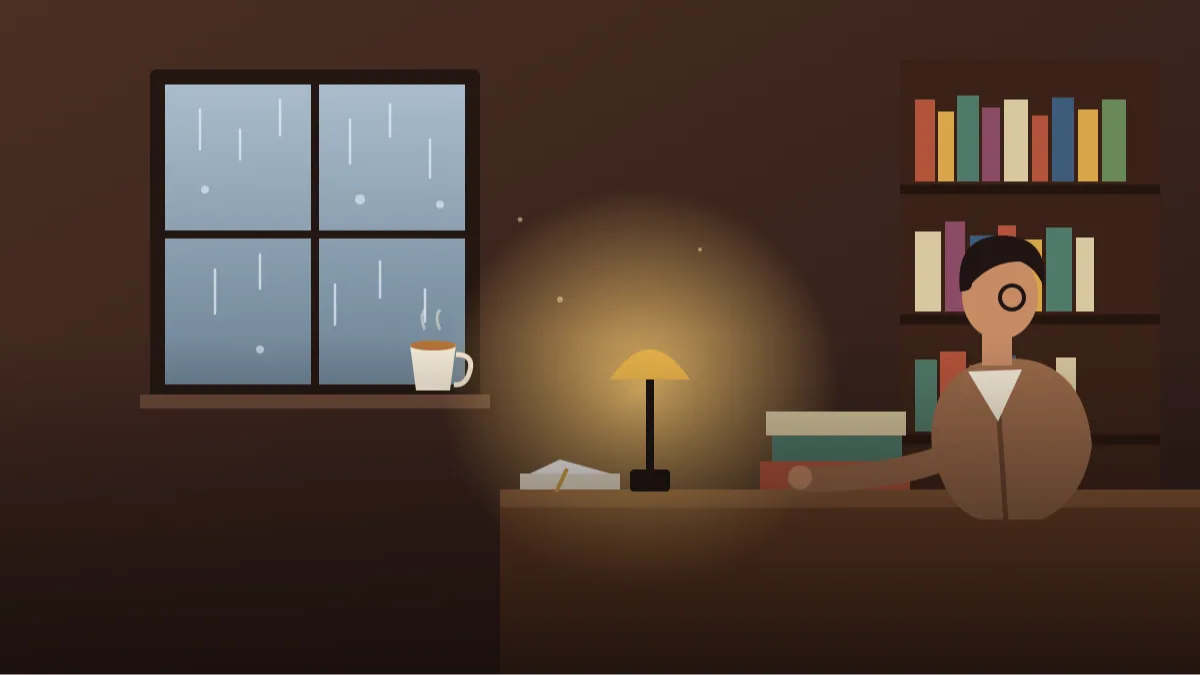
1. Cosy Study Corner
SUBJECT: Use my attached photo, keep my face, hair and glasses unchanged.
OUTFIT: Soft wool cardigan over a collared shirt.
SETTING: Warm study with a wooden desk, a stack of unlabelled books and a lamp, bookshelves blurred.
LIGHT: Warm lamp light plus gentle window light.
CAMERA: Chest-up, 85mm lens look, seated, pen in hand, thoughtful smile.
STYLE: Cosy, literary, rich warm tones.
AVOID: Readable book titles, text on paper, extra people, brand names.
Warm lamp light suits fiction authors. Blank book spines avoid strange fake titles.
2. Rainy Window Reflection
SUBJECT: Attached photo of me, face unchanged.
OUTFIT: Dark sweater, simple scarf.
SETTING: Sitting by a large window with rain on the glass, a cup of tea on the sill.
LIGHT: Soft grey daylight from the window, cool tone.
CAMERA: Three-quarter angle, 70mm lens look, looking out of the window then toward the camera.
STYLE: Quiet, moody but natural.
AVOID: Heavy fog effects, readable text, dramatic shadows hiding the eyes, extra people.
Rain suits poets and literary writers. Keep the face lit so readers can see your eyes.
3. Bookstore Aisle Browse
SUBJECT: Use my attached photo, keep my face the same.
OUTFIT: Casual denim jacket over a tee.
SETTING: Narrow bookstore aisle with tall shelves of colourful unlabelled spines blurred.
LIGHT: Warm shop lights, soft shadows.
CAMERA: Waist-up, 35mm lens look, running a finger along a shelf, glancing at the camera.
STYLE: Curious, friendly, natural colours.
AVOID: Readable titles, other shoppers, store logos, text.
A bookstore suggests you are a reader first. Great for blogger About pages.
4. Garden Bench Notebook
SUBJECT: Attached photo of me, face unchanged.
OUTFIT: Linen shirt or kurta in a muted colour.
SETTING: Quiet garden bench under a tree, flowers blurred behind.
LIGHT: Dappled morning sunlight, soft.
CAMERA: Waist-up, 50mm lens look, notebook open on the knees, gentle smile.
STYLE: Peaceful, natural, fresh greens.
AVOID: Readable handwriting, insects, harsh sun patches on the face, text.
Peaceful outdoor settings suit poets and children's writers. Keep sunlight soft on the face.
5. Book Jacket Back-Cover Portrait
SUBJECT: Use my attached photo, keep face exactly as in the original.
OUTFIT: Dark plain shirt or blouse.
SETTING: Solid deep green or navy background, plain.
LIGHT: Soft studio key from the left, subtle fill.
CAMERA: Head and shoulders, 100mm lens look, calm confident expression.
STYLE: Classic jacket-photo look, restrained colour.
AVOID: Text, borders, heavy retouching, logos.
Publishers love simple jacket portraits. Request a square crop if the layout demands it.
6. Writing at the Typewriter
SUBJECT: Attached photo of me, face unchanged.
OUTFIT: Light shirt with rolled sleeves.
SETTING: Vintage wooden desk with an old typewriter, blank paper and a mug, softly blurred room.
LIGHT: Warm side window light.
CAMERA: Three-quarter body, 50mm lens look, fingers on the typewriter keys, looking up.
STYLE: Nostalgic, warm, natural.
AVOID: Readable typed words, brand names on the typewriter, warped keys, text.
Typewriters are cliché but loved. Check that fingers on keys are not distorted.
7. Cafe Notebook Writer
SUBJECT: Use my attached photo, keep face the same.
OUTFIT: Comfortable knit top.
SETTING: Quiet cafe corner with a small round table, a cup and closed laptop, background blurred.
LIGHT: Soft window light.
CAMERA: Chest-up, 70mm lens look, chin resting on hand, relaxed smile.
STYLE: Casual, modern, warm.
AVOID: Laptop logos, customers, text, steam over the face.
Good for blog About pages and newsletter headers. Keeps the mood modern.
8. Author Event Reading
SUBJECT: Attached photo of me, face unchanged.
OUTFIT: Smart casual blazer, plain shirt.
SETTING: Small library reading room with a lectern and chairs blurred, no audience faces.
LIGHT: Soft stage-like light from the front.
CAMERA: Waist-up, 50mm lens look, holding an unlabelled hardcover book open, speaking expression.
STYLE: Warm, professional, natural.
AVOID: Readable book text, banners, audience members, microphone logos.
Use it for event announcements. Leave the book cover blank and add your real cover later.
What should I upload and say to get an author bio photo prompt result?
Take a simple head-and-shoulders photo in daylight, without a filter. Attach it in Gemini or ChatGPT and paste your chosen prompt. Wait for the first result and judge it honestly.
Authors usually want a gentle, thoughtful face. If the tool gives you a big grin, add 'soft, closed-mouth smile' and run it again. If your glasses reflect the window, say 'no glare on the lenses', and if you have a beard or a particular hairstyle, mention it so the tool does not tidy it away.
- Use daylight for the source photo.
- Mention your glasses or beard.
- Keep text on books blank.
A writer profile photo for a thriller is not the same as for a poetry book
A good writer profile photo reflects your genre without being a costume. A crime writer can use cooler light and a darker background. A romance or children's writer might choose warm colours and a bright smile.
Do not overdo the props. A book, a pen and a cup of tea are enough. Too many items make it feel like a stock photo. Indian writers can add small personal touches, like a steel glass of chai or a diary with a worn cover, instead of the usual typewriter cliché.
- Crime and thriller: cool tones.
- Romance and family: warm tones.
- Non-fiction: neutral and clear.
Garbled book titles and a younger face: mistakes to avoid
The most common mistake is text. AI writes garbled words on pages and book spines. Keep every book and paper blank and add details later.
Another is looking too young. Readers meet you at events, so keep your real age. Honest faces build loyal readers. A third slip is going too glamorous. A heavily airbrushed, fashion-shoot look feels odd on a writer's page; readers trust a calm, ordinary face more than a polished one. Ask for 'natural skin texture, no beauty filter'.
Where will this photo actually be used?
Use the picture on your blog About page, social bios, newsletter signature, and the amazon author page picture section. Keep the same picture on all platforms for recognition, and refresh it every year or two, not every month.
If a publisher requests a high-resolution original, send them an unedited photo. Many traditional publishers prefer real photographs.
For a Kindle or blog photo, test how it looks as a small square on your phone before you upload. If you also run a book Instagram page, the same picture can anchor your highlights and bio, which helps readers who find you in one place recognise you in another.
Reading the result: what an honest author bio photo prompt should give you
When the first image arrives, do not ask whether it looks nice. Ask whether a reader who later meets you at a book fair would say, yes, that is the same person. A good author bio photo prompt result keeps your real skin texture, your real hairline and the small asymmetry of your face. If the skin looks like polished plastic, the eyes look larger than yours, or the jawline has changed, the image has drifted too far.
Check the eyes first, because readers look there. They should rest on the camera or slightly off to the side with a thoughtful look, and both should have the same highlight from the window. Then check the hands if they appear. A hand holding a pen or a cup is where AI makes the most errors, so count fingers and look for a thumb that bends the wrong way.
Finally, look at the neckline and collar. A shirt collar that fades into the skin or has two layers that do not make sense is a quiet sign of editing. If you find it, reply with one sentence such as 'keep the collar exactly as in my photo' rather than regenerating everything.
Matching the setting to your kind of book
The same face can suit very different books depending on the room behind it. For a novelist portrait prompt, a bookshelf out of focus and warm lamp light says story and imagination. For a poet, try an empty window ledge, soft grey light and almost no props. A poet photo ai image works best when it is quiet. Space itself becomes part of the mood.
Non-fiction and business authors often do better in a bright, plain setting such as a light wall or an office corner, because the photo should say clarity and trust. Children's authors can use a garden, a reading nook or a cheerful yellow wall, with a warm natural smile.
A small trick: write the lens and distance in the prompt. A 85mm look, head and shoulders, gives a calm portrait with a soft background. A 35mm look, half body, shows more of the room and feels more like a candid author moment. Choose the first for a book jacket and the second for a blog or newsletter.
- Crime and thriller: side light, darker wall, serious but relaxed face.
- Poetry: one window, muted colours, very few props.
- Children's books: bright colours, warm smile, simple background.
- Academic or history: tidy desk, neutral colours, book spines left blank.
Sizes and platform rules for a writer's picture
Different places want different crops, so decide before you generate. A book author headshot ai image for a Kindle author page is usually viewed as a small square, so the face must be large and centred. A blog About page can handle a wider frame with a bit of the room. For a book jacket, publishers normally ask for a high-resolution portrait, so keep your original photo and do not trust a heavily edited, small image.
For your blogger about page photo, a landscape crop with space on one side lets you place a short intro next to it. For a newsletter, try a tight square so the face stays clear on a phone. Ask Gemini or ChatGPT for the aspect ratio at the end of the prompt, for example 'square 1:1, face centred' or 'portrait 4:5, space above the head'.
We cannot list the exact size rules of each platform, because they change. Check the upload page before you finish. If the platform asks for a real photograph, give it a real photograph.
Adapting the typewriter prompt for a modern writer
Take the Writing at the Typewriter prompt as an example. It is lovely, but most of us write on laptops. Step one: replace the typewriter with 'a closed laptop with a plain lid and a notebook beside it'. Step two: change the light from vintage warm to 'soft morning window light, no yellow cast'. Step three: change the mood line from nostalgic to 'focused and relaxed'.
Now run it and look at the laptop. AI often adds a logo on the lid or readable text on the screen. Add 'no logo, no visible screen text' and the problem usually goes. If the face looks too serious, add 'a very small smile at the corner of the mouth'. That is one prompt, three edits and one safety line, and you now have a modern photo for your newsletter.
Frequently Asked Questions
Can I use an AI-edited photo on my book jacket?
Check with your publisher first. Self-published authors have more freedom, but the image should still look like you.
What background suits poets?
Soft, quiet settings like a window or garden bench work best for poetry. Keep colours muted.
Why does text on books look strange?
AI struggles with small text. Ask for blank spines and add real titles in an editor.
Is a smile necessary?
No. A calm expression is fine for many genres. A small smile makes you approachable.
Final Thoughts
A quiet, honest author bio photo prompt helps readers meet you before they open your book. Pick a mood that fits your writing, use your own photo, and retry with small tweaks.
Try the Cosy Study Corner first, since it is the easiest to get right, and keep your unedited photo safe for any publisher. If you are building a brand around your writing, a founder portrait or professional headshot set has a similar calm, professional approach.
Note: AI image and text results vary by tool, version and settings. Use only your own photos, avoid copying real people’s likeness, and follow the terms of the AI tool you use.