Gemini Vintage Retro Look Prompts for Boys
 AI PHOTO PROMPTSVINTAGE RETRO LOOK BOYS8 COPY-PASTE PROMPTS
Old photographs have a feeling that no filter can fully copy: faded colours, soft focus, a studio backdrop with painted trees. A thoughtful retro look prompt gets close to that feeling by describing the decade, the camera, the film and even the outfit. Instead of tapping one filter, you tell Gemini what a real photo from that time would contain.
We picked eight eras and styles, a 70s film portrait, a 90s school day, an old polaroid, a classic family studio, and more. All clothing is simple and respectful, and the prompts avoid real film posters, stars or brands.
Upload your own photo, ask Gemini to keep your face unchanged, and expect colour and grain to vary. Retro looks are forgiving, so even imperfect results often look charming.
- Copy-Paste Prompts
- Keeping your face sharp when you run a retro look prompt
- Why a retro look prompt works better than a filter
- My vintage portrait still looks modern. What did Gemini miss?
- Throwback captions and a fun way to share the series
- Reading the details that make a retro portrait believable
- Worked example: turning the 70s film portrait into a 90s one
- Colour, grain and framing choices for each era
- Honest limits and respectful use
- FAQs
Copy-Paste Prompts: Retro Look Prompt (8 Ready Ideas)
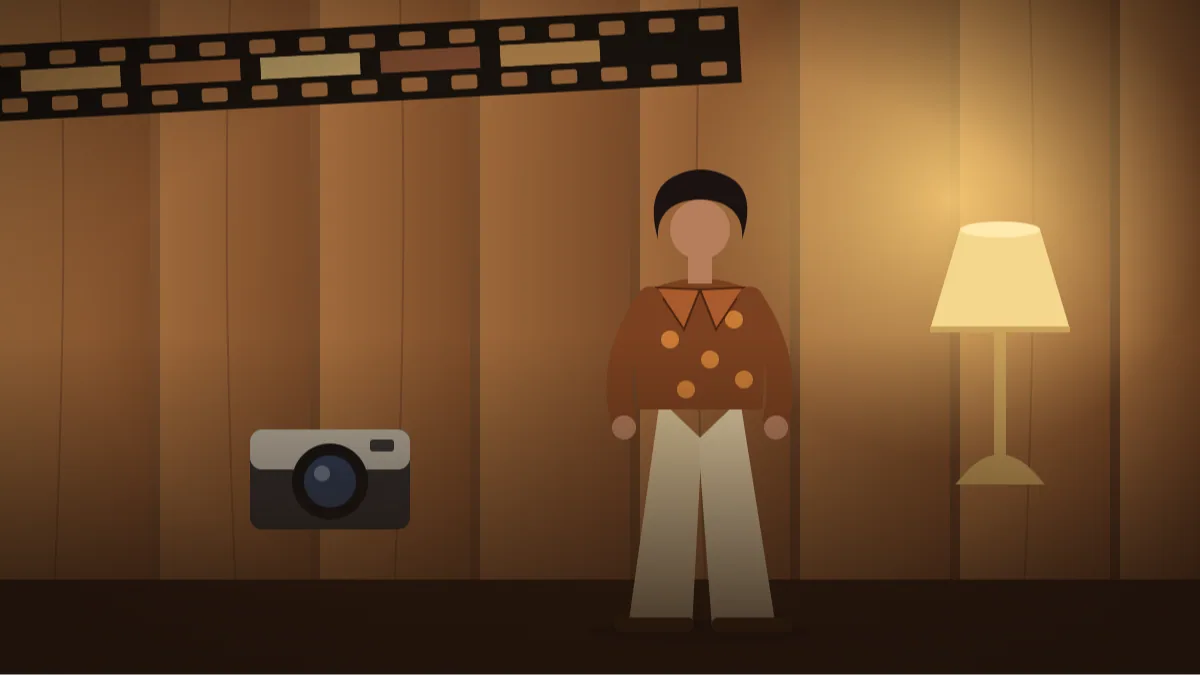
1. 70s Film Portrait
SUBJECT: Use my uploaded photo, keep my face and skin tone exactly unchanged, slight smile, wearing my hair slightly fuller at the sides.
OUTFIT: Wide-collar brown printed shirt, flared beige trousers.
SETTING: Plain wooden wall with a vintage lamp.
LIGHT: Warm tungsten indoor light, soft shadows.
CAMERA: Shot on a 35mm film camera, 50mm lens, slight soft focus.
STYLE: 1970s colour film, warm faded tones, visible grain, light vignette.
AVOID: Modern items, sharp digital look, text.
A 70s film portrait prompt gains realism when the shirt collar is wide and the colours are earthy.
2. 90s School Day Memory
SUBJECT: My attached photo, face unchanged, standing near a school-style gate with a shy smile.
OUTFIT: Simple white shirt, grey trousers, black leather shoes, a canvas bag over the shoulder, no badges or logos.
SETTING: Dusty school ground with a blurred tree and a plain wall.
LIGHT: Bright flat afternoon sun, slightly overexposed highlights.
CAMERA: Cheap point-and-shoot film camera look, 35mm.
STYLE: 1990s photo print, slightly faded greens and yellows, tiny dust specks.
AVOID: Readable school names, smartphones, modern shoes.
Nostalgia pictures work well in a gemini 90s style photo series for friends who grew up in that time.
3. Old Polaroid Frame
SUBJECT: Uploaded photo of me, face unchanged, laughing and leaning on a bicycle.
OUTFIT: Striped tee, denim jacket, rolled jeans.
SETTING: Quiet lane with a pastel wall and shade.
LIGHT: Soft summer light, slightly washed highlights.
CAMERA: Instant camera look, square format with white polaroid border.
STYLE: Old polaroid colours, soft contrast, slight blur at the edges.
AVOID: Writing on the border, modern cars, deep shadows.
An old polaroid photo prompt can include the white border, but leave the handwriting out to avoid weird text.
4. Classic Photo Studio Backdrop
SUBJECT: My own photo, face unchanged, standing stiffly beside a small wooden table with a flower vase, hand resting on it.
OUTFIT: Dark waistcoat over a white shirt, high-waist trousers.
SETTING: Old photo studio with a painted garden backdrop and a patterned rug.
LIGHT: Single soft studio lamp, gentle shadow on the backdrop.
CAMERA: Medium-format film look, 80mm, centre framing.
STYLE: Early studio photo, warm sepia-leaning tones, fine cracks and fading.
AVOID: Text, heavy damage, modern furniture.
This gives that family-album look. Keep damage light so your face stays clear.
5. Retro Bollywood Poster Mood
SUBJECT: Attached selfie as reference, face unchanged, hair neatly set in a side parting, confident gaze.
OUTFIT: Cream silk-look shirt with big collar, dark waistcoat, bell-bottom trousers.
SETTING: Painted-style garden backdrop with soft flowers, an old car silhouette in blur.
LIGHT: Soft glamour light with warm highlights.
CAMERA: 85mm studio portrait.
STYLE: Hand-coloured vintage film feel, bright but soft colours, light grain, no titles or credits.
AVOID: Real actor faces, movie titles, logos, text.
A vintage bollywood style photo prompt should never name real films or actors. Describe the mood in plain words.
6. Black and White Boy-Next-Door
SUBJECT: Use my uploaded photo, face unchanged, sitting on a charpoy-style wooden cot outside a house, relaxed.
OUTFIT: Simple cotton kurta and pyjama.
SETTING: Village courtyard with a clay pot and a neem tree in the blur.
LIGHT: Soft diffused daylight.
CAMERA: Old box camera look, slight vignette.
STYLE: Black and white, grainy, soft focus, historic family photo.
AVOID: Modern objects, wires, text, plastic skin.
Black and white versions hide colour problems and make the era easier to believe.
7. 80s Cassette and Headphones
SUBJECT: My attached photo, face unchanged, listening with large wired headphones, eyes closed with a small smile.
OUTFIT: Oversized pastel windbreaker, high-waist jeans, white sneakers.
SETTING: Bedroom corner with a cassette player, posters without any words or faces, patterned wallpaper.
LIGHT: Warm bedside lamp glow.
CAMERA: 35mm film look, slight grain.
STYLE: 1980s home snapshot, warm and slightly faded.
AVOID: Brand logos, readable posters, modern gadgets.
Blank posters prevent the AI from copying real album covers.
8. Faded Road Trip Snapshot
SUBJECT: Uploaded photo of me, face unchanged, sitting on the bonnet of an old boxy car, squinting playfully in the sun.
OUTFIT: Light checked shirt, jeans, sunglasses held in hand.
SETTING: Empty countryside road with fields, bright blue sky.
LIGHT: Strong sun, slightly overexposed highlights.
CAMERA: Vintage film camera look, 28mm, tilted slightly.
STYLE: Faded print colours, light leaks on the edge, soft grain.
AVOID: Readable plates, modern vehicles, brand badges.
Light leaks add authenticity. Ask for 'subtle' leaks or they cover your face.
Keeping your face sharp when you run a retro look prompt
Upload a sharp, well-lit selfie. Gemini should see your actual features before it adds fading and grain. Paste the prompt and send it. If the face becomes blurry because of the soft focus, reply 'keep my face sharp, apply retro softness only to the background and edges'.
Try one era at a time. Mixing 70s clothes with a 90s camera usually creates a confusing look.
Wear something plain in the source photo if you can. A bright printed t-shirt in your selfie can leak into the vintage outfit, and a logo on it may turn into a strange symbol on the old shirt. If Gemini keeps your modern hairstyle, add 'period-correct neat side-parted hair' for the 70s and 80s, or 'short crop, slightly messy' for the 90s. Your face stays yours; only the styling travels back in time.
Why a retro look prompt works better than a filter
A retro filter alternative prompt can change the clothes, background and camera feel, not just colours. Filters only paint over your photo, while a prompt rebuilds the scene as if it were photographed in another time.
Era words should be paired with camera words: film grain, polaroid border, vignette, light leak. Together they create a believable old image.
- 70s: warm browns, wide collars, flared trousers.
- 80s: pastel windbreakers, wired headphones, soft pinks.
- 90s: faded greens, plain school clothes, point-and-shoot flash.
My vintage portrait still looks modern. What did Gemini miss?
Modern items sneak in a lot: smartphones, new sneakers, LED lights. Always add 'no modern objects' to the avoid line. Another mistake is over-ageing the person; keep the era in the picture, not on your face.
If grain feels muddy, say 'fine film grain, face still sharp'.
Skin is another giveaway. Modern phone portraits have smooth, even skin, while old prints show a little natural texture and uneven colour. Add 'natural skin texture, no beauty smoothing' and the whole picture feels older at once. Also watch the teeth and the smile: a very wide, bright smile looks like a recent selfie, whereas a gentle closed-mouth or half smile fits most old studio photographs. If the picture looks too fake, reduce the effects rather than adding more of them.
Throwback captions and a fun way to share the series
A vintage photo prompt for boys works as a 'throwback' series: 'Dadaji's era but me', 'Imaginary 1992 summer'. Share it as a playful project and mention the AI part.
Be careful not to present AI-made old photos as real historical records. Keep the tone fun and honest.
A neat way to post is a carousel: slide one is your real selfie, and the next four are the 70s, 80s, 90s and polaroid versions. Friends love guessing which decade suits you best, and the comments do the work for you. Add a line like 'Same face, five decades, all AI-styled' so it is clear nobody found an old album. For a school-reunion group chat, a 90s school day image with a joke caption usually gets the biggest laugh.
Reading the details that make a retro portrait believable
A convincing old photograph is a collection of small flaws that a modern camera never makes. Look first at the colour. A 70s film print tends to lean warm, with orange skin, brown shadows and slightly milky blacks. A 90s point-and-shoot print has harder flash, greener shadows and a little red in the eyes. Black and white should have a full range, with deep blacks and soft highlights, not a flat grey.
Then look at the edges. Real lenses of that time were softer at the corners and darkened a bit (vignette). If your image is equally sharp everywhere, add 'soft corners, slight vignette, mild dust and a few scratches'. But keep the face clean, because dust on the nose looks like a skin problem rather than an old photo.
Finally, check the clothes and background against the decade. Collars in the 70s were wide and pointed, 80s shirts had pastel colours and loose cuts, 90s school uniforms were simple and a little crumpled. Phones, wires, new cars or glass buildings in the background immediately break the illusion.
- Colour cast matches the decade
- Soft corners and a light vignette
- No smartphones, LED lights or modern shoes
- Face stays sharp and clean
Worked example: turning the 70s film portrait into a 90s one
Take the 70s film portrait prompt and change it step by step. First, replace 'wide collar shirt, flared trousers, warm brown tones' with 'plain half-sleeve shirt, straight jeans, white sports shoes'. Second, change the light from 'soft window light, warm grain' to 'direct on-camera flash, slight red-eye avoided, faded greens'. Third, change the setting from a studio wall to a school-style ground or a small-town street with a scooter in the background.
Fourth, replace the camera line: 'medium-format film' becomes '35mm compact camera, 4x6 print, slightly oversaturated'. Fifth, add 'faded paper edges, tiny crease on one corner' if you want the print to feel handled. In five edits, the same 70s film portrait prompt becomes a convincing gemini 90s style photo without being rewritten from zero.
Keep the outfit simple. Gemini works better with three clothing items than with ten, and you save the face from being altered by the busy details.
Colour, grain and framing choices for each era
For warm 70s looks, ask for 'amber highlights, brown shadows, fine grain' and frame at chest level, usually with a plain studio wall or wooden panel behind you. The posing was stiff and sincere, so a small smile looks more authentic than a big grin.
For 80s looks, use 'soft pink and teal tones, slight haze, gentle glow around highlights', and frame a little looser, maybe walking or sitting on a stair. For the old polaroid photo prompt, ask for a white square border, a slightly yellow tone and a faint blur at the edges.
For black and white, specify 'high-contrast but soft, no colour, fine grain'. Wear a plain texture such as cotton, and avoid checks that can cause patterns to shimmer. You can also try 'sepia' for studio photographs from earlier in the century, but keep clothing respectful and simple.
Honest limits and respectful use
Gemini cannot recreate a real person's old photograph or a specific film star's look, and we do not ask it to. The results are inspired by a decade, not copies of any real picture. Do not use these images to pretend that an event happened in the past, for example a fake photo with a famous person or a fake school record.
If you want to make a gift, you can use the same prompt with a parent's own photo, but only with their permission. Many families enjoy seeing a modern face in an old-style frame as a joke, and the warmth of the idea is the whole point.
Frequently Asked Questions
Can I make the photo look like it is really old?
Yes, with grain, fading and a border, but do not present it as a real historical document. Label it as an AI-styled photo.
Why does the face get blurry?
Soft focus may be applied everywhere. Ask for a sharp face and let the softness stay in the edges and background.
Which era is easiest for Gemini?
The 70s and 90s film looks are usually the most consistent. Polaroid and sepia studio frames are also reliable.
Can I add text like a date stamp?
AI text is unreliable. Add a date stamp in an editing app after you finish the image.
Final Thoughts
A careful retro look prompt copies the way a real old photograph was made: the right decade of clothes, the right camera, the right light and a little honest grain. Your own face stays at the centre, just wearing another era.
Pick the 90s school day or the polaroid first, then try the studio backdrop. If you enjoy the moody, film-like side of this, our rainy street and rooftop sunset prompts for boys will feel familiar.
Note: AI image and text results vary by tool, version and settings. Use only your own photos, avoid copying real people’s likeness, and follow the terms of the AI tool you use.