Gemini Traditional Wedding Couple Portrait Prompts
 AI PHOTO PROMPTSTRADITIONAL WEDDING COUPLE PORTRAIT8 COPY-PASTE PROMPTS
Traditional wedding clothes are full of detail: zari borders, layered jewellery, flower garlands and rich colour. A clear wedding couple prompt helps Gemini respect those details instead of turning them into a golden blur.
We wrote eight prompts that cover different parts of an Indian wedding story, from a calm studio portrait to a mandap frame and a haldi morning. They work for newly married couples, anniversary portraits, or just for fun if you want to see how you would look in a different outfit.
Please use your own photo each time and keep the setting respectful. AI can still bend jewellery and sometimes confuses fabrics, so we have added notes on how to correct such things.
- Copy-Paste Prompts
- How to paste a wedding couple prompt into Gemini without losing the details
- Zari, silk and necklaces: getting fabric and jewellery right
- Respectful settings: what to keep in the frame and what to leave out
- Where can you use these portraits? Cards, banners and family chats
- Reading a finished wedding couple prompt result like a photographer
- Make it yours: adapting one wedding couple prompt to your family tradition
- Afternoon gold or evening lamps: light and colour for a mandap couple photo prompt
- FAQs
Copy-Paste Prompts: Wedding Couple Prompt (8 Ready Ideas)
1. Classic Studio Portrait
SUBJECT: Use my attached couple photo, faces and features unchanged, standing side by side, a gentle smile.
OUTFIT: He in a cream sherwani with a maroon stole, she in a red silk saree with a thin gold border.
SETTING: Plain warm-grey studio backdrop with a small floral arrangement at the side.
LIGHT: Soft front softbox, subtle rim light on shoulders.
CAMERA: 85mm, upper-body portrait, sharp eyes.
STYLE: Elegant, rich colours, natural skin.
AVOID: Heavy retouching, warped jewellery, text.
Keep borders thin. Complex patterns tend to blur.
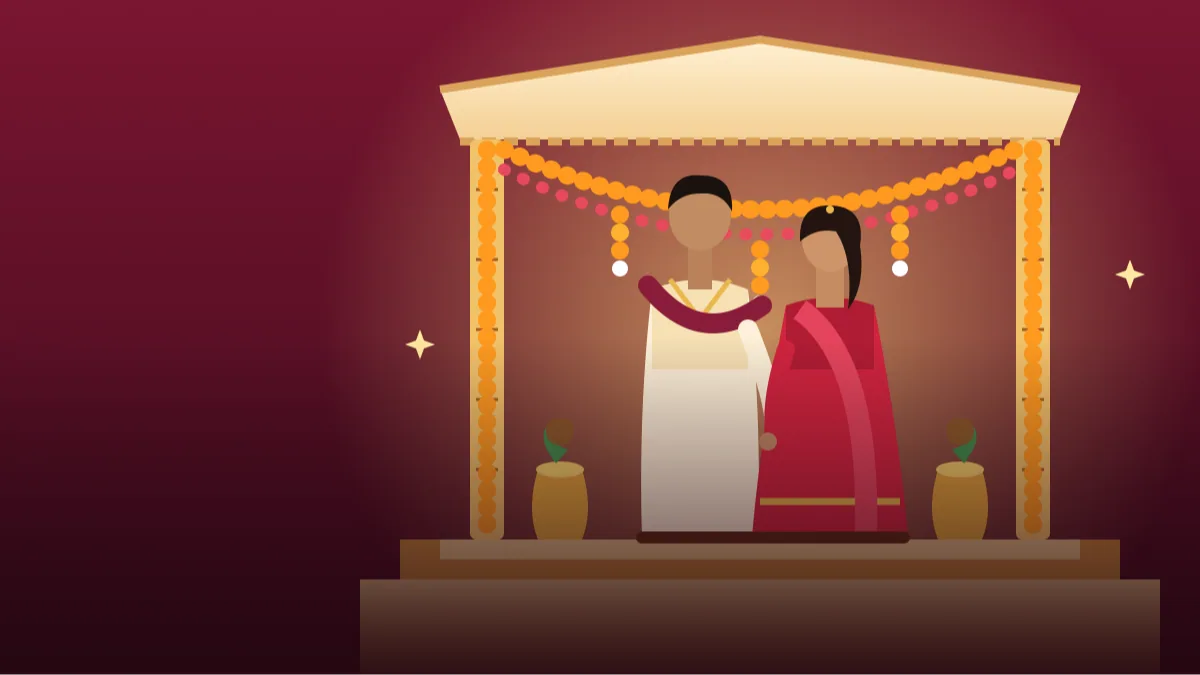
2. Mandap Floral Frame
SUBJECT: Our attached photo, faces same, seated close inside a decorated mandap, looking at each other.
OUTFIT: Ivory and gold for him, deep pink lehenga for her.
SETTING: Open-air wedding mandap draped in marigold and jasmine garlands, soft fabric canopy.
LIGHT: Warm afternoon glow, gentle shadows.
CAMERA: 50mm, medium-wide shot.
STYLE: Traditional, vibrant but natural.
AVOID: Religious idols, crowds, readable text.
Garlands make a pretty frame. Ask for 'simple symmetrical flowers' for clean shapes.
3. Haldi Morning Laughter
SUBJECT: My attached photo, faces unchanged, laughing with a light touch of yellow turmeric paste on cheeks.
OUTFIT: Simple white cotton kurta and a pale yellow suit.
SETTING: Courtyard decorated with marigolds and brass pots.
LIGHT: Bright early sun, cheerful and clear.
CAMERA: 50mm, candid medium shot.
STYLE: Joyful, bright yellows, natural colour.
AVOID: Messy paste covering eyes, extra people, text.
Ask for a 'small dab' of haldi so the faces remain easy to recognise.
4. Sangeet Evening Glow
SUBJECT: Use our attached couple photo, faces same, holding hands in a dance-step pose.
OUTFIT: Royal blue sherwani, emerald lehenga with minimal embroidery.
SETTING: Decorated evening stage with warm lights and flowers.
LIGHT: Warm stage glow, soft bokeh in the background.
CAMERA: 35mm, full body, slight motion.
STYLE: Festive and lively, cinematic.
AVOID: Crowd faces, brand banners, strange hands.
Ask for an empty stage to avoid weird crowd faces.
5. South Indian Silk Look
SUBJECT: My attached photo, faces unchanged, standing with a calm, respectful posture.
OUTFIT: Kanjivaram silk saree in rich green with gold zari for her, white veshti and angavastram for him.
SETTING: Temple-style wooden pillar hall with brass lamps.
LIGHT: Warm lamp light mixed with daylight.
CAMERA: 50mm, full body, upright framing.
STYLE: Traditional, authentic colours, fine fabric detail.
AVOID: Idols, text, distorted drape.
Describe the drape in one sentence so the AI understands the saree style.
6. Bengali Red and White
SUBJECT: Our attached photo, same faces, a quiet portrait side by side.
OUTFIT: Red-bordered white saree for her, cream dhoti-kurta with a simple stole for him.
SETTING: Old house veranda with arches and potted plants.
LIGHT: Soft diffused window light.
CAMERA: 50mm, three-quarter shot.
STYLE: Calm, heritage, subtle warmth.
AVOID: Heavy makeup look, text, modern objects.
Clearly name the border colour, since AI may default to plain saree.
7. Punjabi Phulkari Portrait
SUBJECT: Use my attached couple photo, faces same, shoulders touching, big happy smiles.
OUTFIT: He in a turban-style safa with a bright kurta, she in a phulkari dupatta over a plain suit.
SETTING: Mustard field edge with a wooden cart.
LIGHT: Golden hour, warm and cheerful.
CAMERA: 70mm, medium shot.
STYLE: Vibrant, rural, genuine joy.
AVOID: Fake tractors with logos, extra people, text.
A phulkari dupatta adds colour, but ask for a simple pattern to avoid mess.
8. Anniversary Portrait with Garland
SUBJECT: Our attached photo, faces unchanged, holding fresh garlands with warm smiles.
OUTFIT: Cream kurta and a soft pink saree.
SETTING: Home living room with a simple brass lamp and rose petals on a table.
LIGHT: Gentle indoor light with warm window fill.
CAMERA: 50mm, medium shot, slight vignette.
STYLE: Intimate, warm, true to life.
AVOID: Over-decorated rooms, text, strange hands.
Good for a married-couple memory frame or a parent's anniversary gift.
How to paste a wedding couple prompt into Gemini without losing the details
Attach one clear photo and paste one prompt at a time. Tell Gemini early on that both faces and features must remain unchanged, and mention which person is on the left and which on the right, so that the outfits do not swap.
Traditional outfits carry many small details, so give the AI one or two words per garment instead of long descriptions. 'Cream sherwani, maroon stole' is better than a paragraph about embroidery. Add the rest in follow-up messages once the base picture looks right.
- Use a sharp front-facing source photo
- Keep outfit descriptions short
- Retry if jewellery looks odd
- Save good versions as you go
Zari, silk and necklaces: getting fabric and jewellery right
Silk, zari and heavy jewellery are tough for AI. If a necklace melts into the neckline, ask for 'simple gold necklace resting on collarbone'. If the dupatta looks like a tangle, write 'dupatta draped over left shoulder'.
Colour names help. 'Deep maroon', 'bottle green' and 'ivory' guide the AI better than 'nice colour'. Pair two main colours and one metallic accent for the cleanest traditional Indian wedding portrait prompt result.
If a pattern like phulkari or kanjivaram border turns into noise, ask for 'simple border only, plain body' and let the colour do the work.
Respectful settings: what to keep in the frame and what to leave out
Weddings carry cultural and religious meaning, so keep the scenes respectful. We avoid religious idols and sacred symbols in the frame, and we suggest simple floral decor instead. Poses should stay wholesome: standing side by side, a gentle smile, a hand on the arm.
Also try not to copy a specific real couple's look or a famous designer label. Describe the style in plain words, and your portrait stays original. Rituals and dress differ by family and region, so adjust the wording to your own tradition.
- No idols in the frame
- No real brand or designer names
- Simple floral decor
- Natural makeup and smiles
Where can you use these portraits? Cards, banners and family chats
These portraits work as digital anniversary cards, wedding website banners, thank-you notes after the function or family group chat surprises. A square crop suits Instagram, while a tall frame fits WhatsApp status.
Mention that the picture is AI-edited if you share it with relatives, so nobody thinks it was a real shoot. If an elder is not comfortable with an edited picture, a plain note in the message usually clears that up.
For a print or a frame on the wall, ask for plenty of empty space around the couple, so the edges do not get cut when you crop.
Reading a finished wedding couple prompt result like a photographer
Start with the clothes, because that is where AI slips most. For a sherwani, check that the buttons run in a straight line and the collar sits neatly at the neck. For a saree, trace the pallu from the shoulder down. If it vanishes or becomes two pallus, ask for 'one pallu falling over the left shoulder to the waist, pleats visible at the front'. For a lehenga, look at the waistband and the flare. A skirt that begins at the ribs or has no gathers needs the words 'fitted waist, full flare with soft gathers'.
Next, jewellery. Real jewellery is symmetrical, so check that both earrings match and the maang tikka sits on the centre parting. Bangles should appear as separate rings, not one thick tube. Then look at the faces and hands together. In a couple picture the usual trouble is that one person looks fine and the other drifts. Ask Gemini to 'match each face to the attached photo separately' and retry.
Finally, the proportions. Look at the height difference between the two of you. If the AI made you equal height and you are not, say 'he is taller by about a head' in the prompt. A true-to-life height difference makes the portrait feel honest rather than generic.
Make it yours: adapting one wedding couple prompt to your family tradition
The eight prompts cover a few regions, but India has hundreds of wedding customs, so treat them as starting points. Rituals, dress and colours differ by family, community and even village. A red saree is the bridal colour in many homes, while in others a pastel, white or green outfit is traditional. We make no claim about what is correct for you. Describe your own tradition in your own words and let Gemini handle the photography.
Here is a worked example. Take the Mandap Floral Frame. Suppose your family is Marathi. Change the OUTFIT line to 'a green nine-yard saree with a gold border for her, white dhoti and kurta with a cream stole for him', and change the SETTING to 'simple wooden stage decorated with mango leaves and white flowers, no idols'. The camera and light lines stay as they are. In a couple of minutes you have a portrait that looks like your own family instead of a generic template.
If you are not sure about a detail, ask an elder or a cousin for the correct name of the garment. Using the right word, such as 'nauvari', 'veshti', 'phulkari' or 'dhoti', gives the AI more to work with than 'traditional outfit' ever will. When the garment name does not work, describe the colour and the way it is worn in one short sentence.
Afternoon gold or evening lamps: light and colour for a mandap couple photo prompt
Time of day changes everything in a wedding frame. Warm afternoon light makes marigold glow and gold zari shine. Early morning light is softer and kinder to skin, and it suits haldi and quiet home ceremonies. Evening lamp light suits sangeet and receptions but can crush darker clothes into black, so keep at least one outfit in a lighter shade like ivory, peach or sky blue.
For colour, try this simple rule. Use one dominant colour for the clothes, one flower colour for the decor and one metallic accent. Maroon, marigold orange and gold form a classic trio. Teal, peach and silver feel modern. When there are more than three strong colours, the AI starts muddling them, and the faces lose attention.
Frequently Asked Questions
Can Gemini create accurate regional outfits?
It can get close if you name the garment and colour clearly. Some regional details may be off, so check carefully and adjust the description if something looks wrong.
Is it okay to change the outfit colours?
Yes, edit the OUTFIT line. Use clear colour names and avoid listing too many items.
How do I stop the faces from looking too smooth?
Add 'natural skin texture, no heavy retouching' to the style line and request a slightly lower contrast look.
Can I use a wedding photo as the source?
Yes, but a simpler photo with clear lighting often works better than a busy ceremony picture.
Are these prompts suitable for sharing?
Yes, because they avoid sacred symbols and celebrity looks. Always review the final image for odd details before posting.
Final Thoughts
A thoughtful wedding couple prompt can turn a normal picture into a tasteful portrait with the colours and warmth of your own culture. Pick one, add your own details and let Gemini do the first draft, then polish with small changes.
Try the South Indian silk look first if you love rich fabric detail, and when you are ready for something shorter and simpler, the engagement ceremony prompts are a gentle next step.
Note: AI image and text results vary by tool, version and settings. Use only your own photos, avoid copying real people’s likeness, and follow the terms of the AI tool you use.