Gemini Cinematic Close-Up Portrait Prompts for Girls
 AI PHOTO PROMPTSCINEMATIC CLOSE-UP PORTRAIT GIRLS8 COPY-PASTE PROMPTS
Think of the last scene in a film where the heroine turns her head and the whole hall goes quiet: sharp face, blurred lights behind her, colours chosen with care. A well built cinematic portrait prompt teaches Gemini those choices so your own photo looks like a still from a film, without copying any real movie or person.
Just writing 'cinematic' gives generic results. Better pictures usually come from describing what a film camera would do: lens length, aperture, light direction, colour grade and a hint of story. Leave a little empty space in the frame too, because filmmakers use space to create mood.
Upload your own photo, ask Gemini to keep your face unchanged and try the eight prompts. Because these looks are dramatic, adjust the intensity if the first result feels too heavy.
- Copy-Paste Prompts
- What should I upload and check first?
- Which lens, light and colour words give a movie-still look?
- What do I do when grain, fog and flare swallow my face?
- What caption goes with a film-style frame?
- How do I know the close-up is actually good?
- What do 85mm, f/1.8 and 2.39:1 actually mean?
- How can one line change the whole mood?
- What are the limits, and how do I stay respectful?
- FAQs
Copy-Paste Prompts: Cinematic Portrait Prompt (8 Ready Ideas)
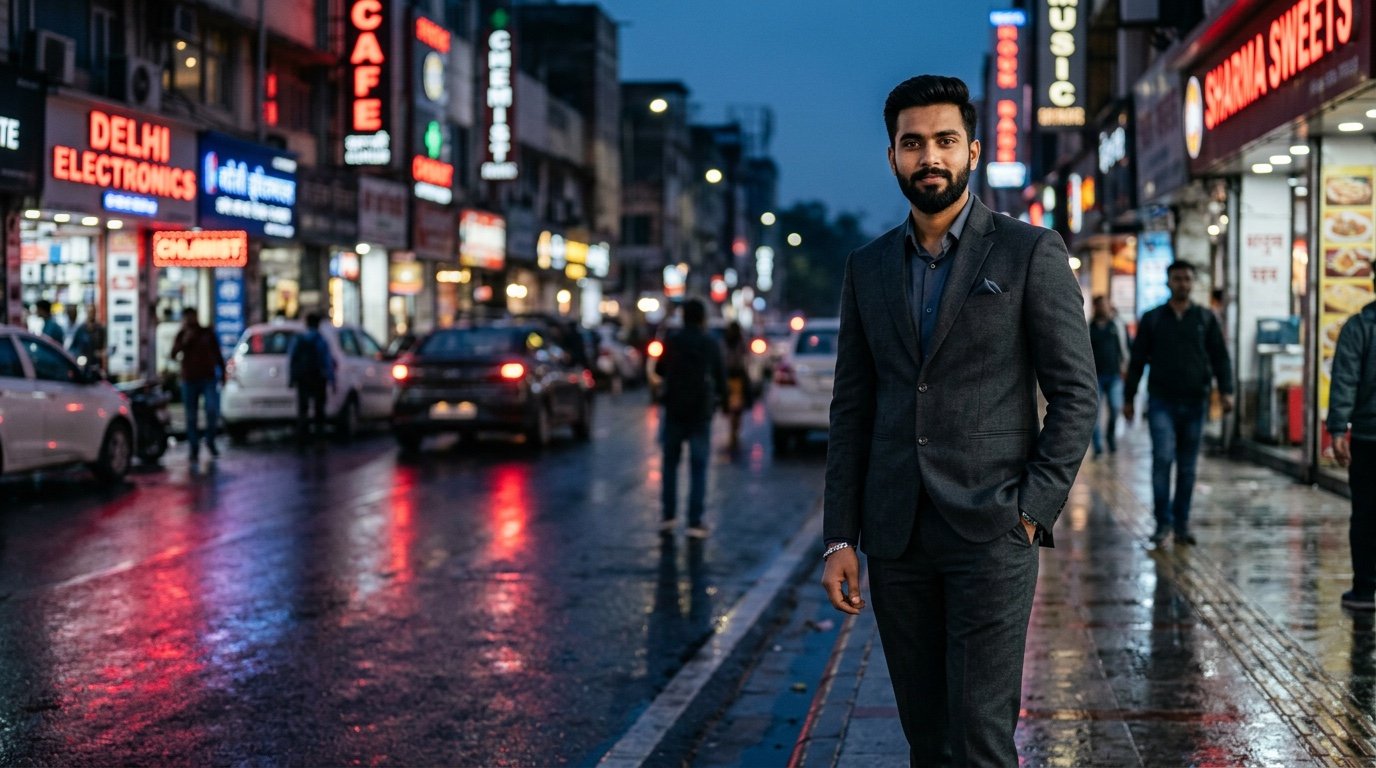
1. Teal and Orange Street Night
SUBJECT: Use my uploaded photo, face unchanged, tight close-up, looking just past the camera, thoughtful expression.
OUTFIT: Dark jacket collar visible, no accessories.
SETTING: City street at night with blurred shop lights and passing headlights far behind, no readable signs.
LIGHT: Warm orange street light on one side of the face, cool teal ambience on the other.
CAMERA: 85mm anamorphic look, f/1.8, oval bokeh in the background.
STYLE: Cinematic teal and orange grade, subtle film grain, natural skin.
AVOID: Green skin, text, crushed blacks.
Anamorphic gives stretched oval bokeh. Reduce 'teal' if your skin turns greenish.
2. Window Light Drama
SUBJECT: My own uploaded photo, face unchanged, head resting against a window frame, eyes lowered then slowly lifting.
OUTFIT: Simple white shirt, hair loose.
SETTING: Dim room with a tall window and sheer curtain, dust floating in the beam.
LIGHT: Hard sunbeam through the window falling across the eyes and cheek, rest of the room in soft shadow.
CAMERA: 50mm lens, f/1.4, close-up, 2.39:1 wide frame feel.
STYLE: Quiet drama, warm highlights, cool shadows.
AVOID: Blown-out beam, dark muddy face, extra objects.
A strip of light across the eyes is a film classic. Ask for 'detail in the shadow side' to avoid mud.
3. Rain on the Car Window
SUBJECT: Keep my face same as the uploaded photo, seated in the back of a car, looking out of the window, calm face.
OUTFIT: Charcoal coat collar and a thin scarf.
SETTING: Rainy night city seen through the glass with streaks of coloured lights.
LIGHT: Passing red and blue city light on the face, dim interior.
CAMERA: 85mm lens, f/1.8, side profile close-up.
STYLE: Moody film frame, long-lens compression, teal and magenta tones.
AVOID: Heavy glare on the glass, face in total darkness, text.
Profile shots hide minor face errors and feel cinematic.
4. Golden Hour Wheat Field Close-Up
SUBJECT: My uploaded photo, face unchanged, hair blowing across the cheek, eyes closed then slightly open.
OUTFIT: Cream shirt collar visible.
SETTING: Wheat field at sunset, soft blurred horizon.
LIGHT: Strong golden backlight with soft face fill, lens glow.
CAMERA: 100mm lens, f/2, close-up, subtle lens flare in a corner.
STYLE: Warm cinematic, painterly highlights, gentle grain.
AVOID: Orange skin, flare covering the eyes, hair across both eyes.
Flare in a corner adds atmosphere. Keep it away from the face.
5. Black and White Film Noir Look
SUBJECT: Face exactly like my uploaded photo, chin slightly lowered, eyes up at the camera.
OUTFIT: Dark coat with raised collar, thin earrings.
SETTING: Dark alley with a soft glow from a lamp behind.
LIGHT: Hard side light with deep shadows and a bright rim on the hair.
CAMERA: 85mm lens, f/2, head and shoulders.
STYLE: Black and white film noir, strong contrast, light fog, fine grain.
AVOID: Flat grey, text, heavy smoke covering the face.
A touch of fog makes the light beams visible. Keep it light so the face stays clear.
6. Neon Diner Booth Scene
SUBJECT: My own uploaded photo, face unchanged, resting her chin on folded hands, soft smile at someone off-camera.
OUTFIT: Red jacket, hair in loose waves.
SETTING: Retro diner booth with a glowing neon shape behind (no words), a cup and a plate in soft focus.
LIGHT: Pink neon from behind, warm table lamp on the face.
CAMERA: 50mm lens, f/1.8, medium close-up.
STYLE: Cinematic romance mood, rich reds and pinks, grain.
AVOID: Neon text, extra people in focus, plastic skin.
Looking at someone off-camera adds story. Keep neon as a shape to avoid fake words.
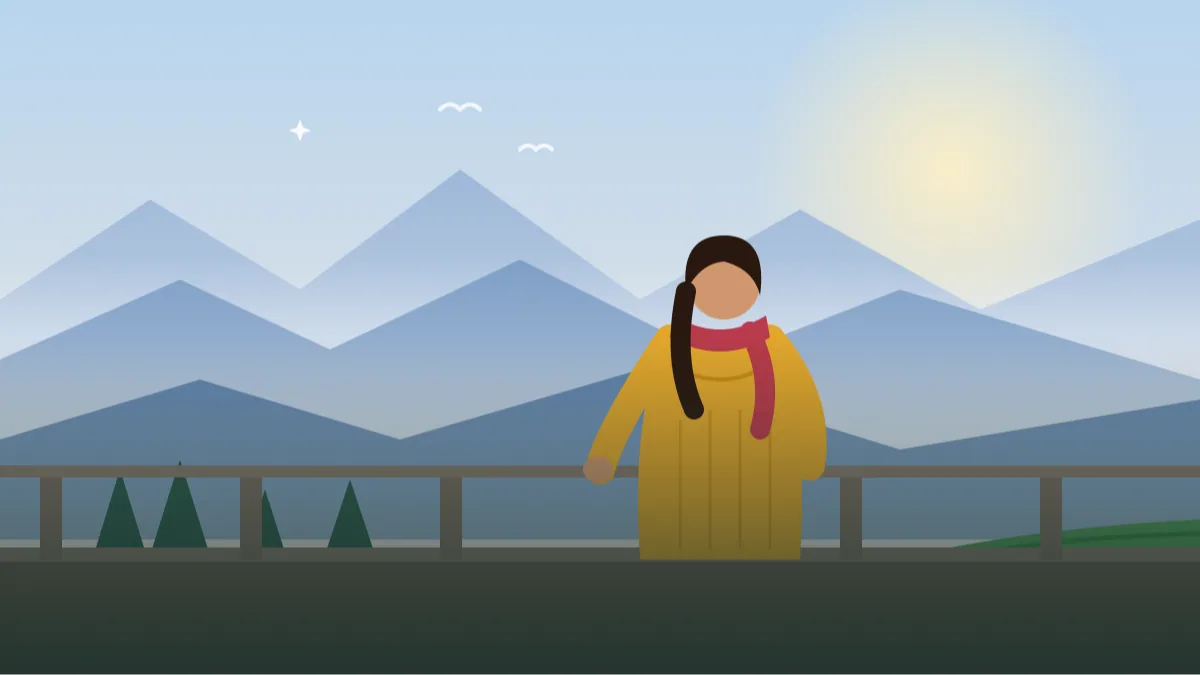
7. Foggy Morning Mountain Portrait
SUBJECT: My uploaded photo, face unchanged, standing at a viewpoint, wrapped in a shawl, looking at the camera calmly.
OUTFIT: Olive shawl over a dark sweater.
SETTING: Mountain ridge with layers of fog behind and a pine tree silhouette.
LIGHT: Soft diffused dawn light, cool tones, subtle warm glow on the cheek.
CAMERA: 70mm lens, f/2.8, waist-up with space on the left.
STYLE: Calm cinematic, muted greens and blues, soft contrast.
AVOID: Fog hiding the face, harsh edges, floating peaks.
Empty space on one side gives that wide-screen feel. Warm cheek light stops the face turning blue.
8. Candlelit Interior Close-Up
SUBJECT: Keep my face same as the uploaded photo, leaning towards a small candle, eyes reflecting the flame, quiet expression.
OUTFIT: Dark shawl and silver earrings.
SETTING: Dark room with a wooden table and shadowy shelves behind.
LIGHT: Soft warm candle light on the face only, deep surrounding darkness.
CAMERA: 85mm lens, f/1.4, tight close-up with shallow depth.
STYLE: Low key cinematic, golden glow, high detail in the eyes.
AVOID: Flame touching hair, over-bright face, noisy grain.
Ask for a small, safe candle. Candlelit faces suit dramatic portraits and poetry pages.
What should I upload and check first?
Upload a high-quality, front-facing photo. Cinematic prompts are dramatic, so the more detail Gemini sees in your face, the better it holds on to it. A selfie taken near a window in daytime is a good base; a dark, grainy night photo gives the AI too little to work with.
Paste one prompt and send. After the result, check the eyes first, because cinematic shots live and die by them. If they look glassy or uneven, retry with 'natural, sharp, symmetrical eyes with catchlights'. If the whole face changed, add 'keep my exact face from the attached photo' and run it again in the same chat.
Which lens, light and colour words give a movie-still look?
A movie still portrait prompt works best with lens and aperture words. 85mm f/1.8 gives a tight face with creamy background; 35mm f/2.8 gives a story-rich wide shot.
Light direction creates drama. Side light adds depth, backlight adds glow and a single practical source like a lamp, a candle or a tube light in a tea stall makes the scene feel real.
For colour, use a pair. A teal and orange portrait prompt is the famous one, but also try green and amber, or blue and magenta. Avoid mixing more than two, or the frame looks like a festival banner.
What do I do when grain, fog and flare swallow my face?
Overdoing it is the main issue. Too much grain, flare and fog make the face disappear, so pick one or two effects, not all three. Another common problem is a face that is too dark. Add a soft fill or a gentle light on the cheek, and ask for 'shadow side still showing detail'.
- Skin turns green: reduce teal.
- Looks like a poster: ask for 'natural candid moment'.
- Bokeh looks fake: say 'soft, round, natural out-of-focus light'.
What caption goes with a film-style frame?
A shallow depth of field portrait keeps the eyes sharp and melts everything else. Ask for a wide aperture like f/1.8 and a long lens like 85mm for the classic effect, and mention 'eyes in sharp focus' so the AI does not blur the face itself.
Caption ideas: 'Frame by frame', 'Scene one, take two', 'Main character light'. Keep the caption short, let the picture do the talking, and mention that the picture is AI-made when you post it.
How do I know the close-up is actually good?
Before you fall in love with the mood, look at the face the way a cinematographer would. The eyes must be sharp, and there should be a small bright reflection in each, called a catchlight. Without it, eyes look dull or glassy. The skin should keep its texture; if it has become shiny plastic, the picture will fail even if the colours are lovely. One side of the face can be darker, but the shadow side should still show some detail, not a black hole.
Next, check the colour on skin. In a teal and orange portrait prompt, skin should lean warm and the background cool. If your face turns grey-green, tell Gemini 'reduce teal on skin, keep teal only in the background and shadows'. If the face looks orange like a fake tan, say 'natural skin tone matching the attached photo, warm light only on one side'.
Finally, check the story. A cinematic frame suggests something happening just outside it: a glance past the camera, a hand reaching for a cup, light falling from a window. If your picture is a plain face looking at the lens with fog behind, add a line of motivation, like 'looking toward a door that has just opened'. This one small idea changes a pretty picture into a still from a film.
What do 85mm, f/1.8 and 2.39:1 actually mean?
Photography words can sound scary, but only a few matter here. A long lens, such as 85mm or 100mm, compresses the background and makes it melt into soft shapes, which flatters faces. A wide lens, such as 35mm, shows more place and feels like a story scene. A small f-number, like f/1.4 or f/1.8, means a very thin sharp area: eyes sharp, ears already soft. Larger numbers like f/4 keep more in focus.
For a shallow depth of field portrait, write something like '85mm, f/1.8, eyes in sharp focus, background fully blurred'. For a wide-screen film feeling, ask for a 2.39:1 frame; if the tool gives a normal shape, crop it yourself later with black bars or just a wide crop. The oval-shaped light blobs of an anamorphic bokeh photo prompt are a cosmetic effect: ask for 'oval background highlights' and keep expectations modest, since results vary.
Do not stack five effects. Pick one lens, one light direction and one colour pair, and describe a quiet moment. Short, calm prompts often beat long ones.
How can one line change the whole mood?
Take the window light prompt as a base and try three versions. For a softer, hopeful one, replace the hard sunbeam with 'soft morning light through a sheer curtain, pale warm tones, gentle shadows'. For a colder, lonely feeling, use 'overcast blue light, desaturated colours, a little blue in the shadows'. For a warm memory, use 'late afternoon sun, amber highlights, dust floating, gentle grain'.
The outfit and room stay the same in all three. Only the light and colour lines changed, and the story is completely different. This is the easiest way to learn what each word does, and it gives you a small series of the same person in three moods, handy for a profile carousel.
Keep emotion natural. A serious face is fine, but forced crying or dramatic pain is better avoided, and so are pictures that imitate a real actress or a particular film. Write your own mood, not someone else's frame.
What are the limits, and how do I stay respectful?
AI pictures of a face can drift: eyes slightly bigger, jawline slimmer, skin lighter. If that bothers you, repeat the keep-my-face line and choose a source photo with clear light. Do not ask for smoother skin or a thinner face unless you really want it; the prompt rarely needs it.
Use only your own photo, or a friend's with clear consent, and never edit someone else's picture to make them look in a way they would not like. Avoid revealing clothes and keep the mood respectful, since these are portraits for your own profile and not for strangers to repost. If a result looks like a particular actress, discard it and adjust the prompt.
Frequently Asked Questions
Can I use a movie name in the prompt?
It is better not to. Describe the look instead, like moody teal and orange or film noir. That keeps the image original and safe.
Why does my skin look green or blue?
The colour grade is too strong. Lower the teal and add natural skin tone with a warm key light.
What does anamorphic mean here?
It is a lens style that creates wide frames and oval bokeh. In an anamorphic bokeh photo prompt, it simply adds that cinema feel.
Do I need a high-resolution source photo?
Sharper source photos help Gemini hold facial details, especially in close-ups.
Will it look exactly like a film?
No, it will look film-inspired. Results vary each time, so adjust light and colour until it matches your idea.
Final Thoughts
Cinematic pictures come from a few careful choices about lens, light and colour, and a clear cinematic portrait prompt hands those choices to Gemini. Begin with the window light drama or the teal and orange street night, and check the catchlights in the eyes.
Change only the light line the second time, and see how the story shifts. If you like quiet, soft frames, the watercolour portrait ideas on Tech Boi Prompt are a gentle contrast to these dramatic ones.
Note: AI image and text results vary by tool, version and settings. Use only your own photos, avoid copying real people’s likeness, and follow the terms of the AI tool you use.