Bhai Dooj AI Photo Prompts for Brothers and Sisters
 AI PHOTO PROMPTSBHAI DOOJ BROTHERS SISTERS8 COPY-PASTE PROMPTS
Bhai Dooj is the simplest festival on the calendar. A sister puts a tilak, a brother hands over a small gift, and someone always finishes the last sandesh. If your brother is in another city this year, or you just want one nice picture from the day, a thoughtful bhai dooj prompt can make a warm photo or greeting from your own pictures.
We have kept every prompt wholesome and family-friendly: tilak rituals, sweets, matching traditional outfits, and a few greeting-card ideas. If you want to include both siblings, use a real photo where both agree, and ask the tool to keep both faces unchanged. For two separate photos, the long-distance prompt is a good start.
As with all AI images, expect some variation. Hands and plates can look strange on the first try, so retry or simplify when that happens.
- Copy-Paste Prompts
- What should a Bhai Dooj picture actually contain?
- How do I attach two siblings without mixing faces?
- How do I keep the pose and outfits natural?
- What caption or wish can go with the picture?
- What do I do about odd plates, hands and extra diyas?
- How do I get the tilak right and keep it respectful?
- What if both faces keep blending into each other?
- Which colours and light make a Bhai Dooj photo glow?
- Can I turn this into a greeting card, and who should see it?
- FAQs
Copy-Paste Prompts: Bhai Dooj Prompt (8 Ready Ideas)
1. Tilak Ceremony Moment
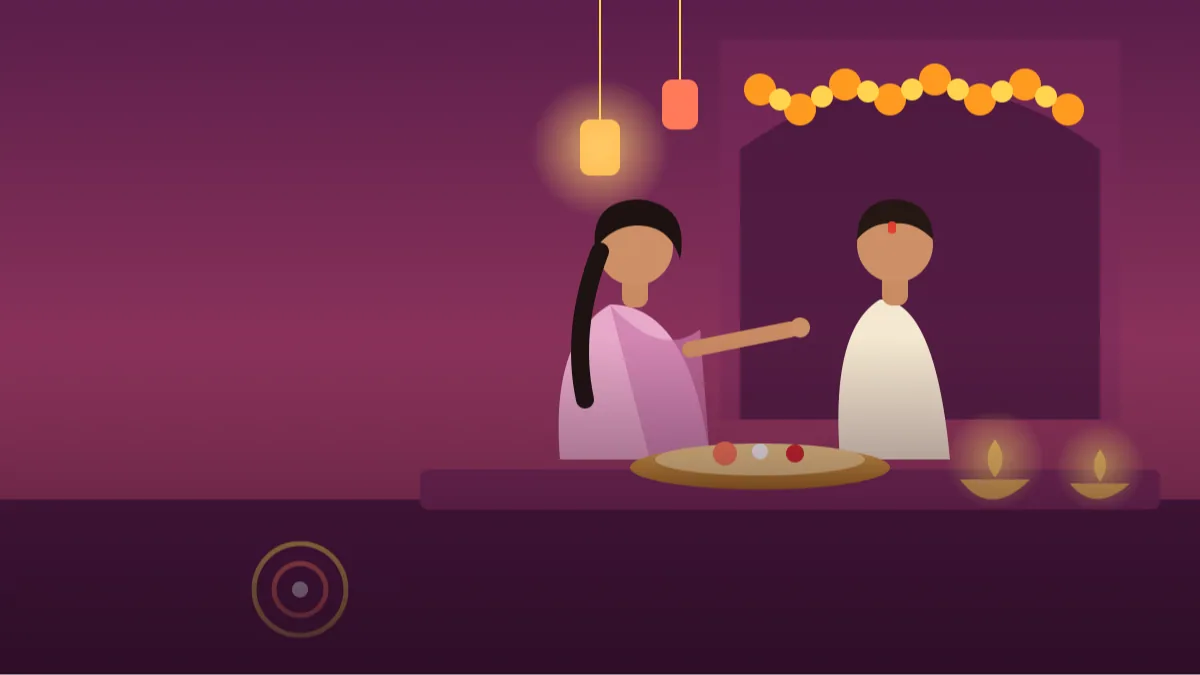
SUBJECT: Use my attached photo of two siblings, keep both faces unchanged, the sister gently applying a small tilak on her brother's forehead, brother smiling with eyes closed
OUTFIT: sister in a pastel saree or suit, brother in a cream kurta
SETTING: clean home with a decorated thali, a lit diya and marigold petals
LIGHT: warm soft lamp light plus window light
CAMERA: 50mm lens, f/2.8
STYLE: warm realistic photograph
AVOID: extra fingers, blurry faces, text
Use a photo where both have agreed. If the hands look off, ask for the tilak to be 'already applied'.
2. Sweets Sharing Shot
SUBJECT: Face unchanged from my uploaded photo, sitting at a low table, smiling and offering a piece of sweet from a plate
OUTFIT: mustard kurta or a soft green suit
SETTING: table with a thali of assorted mithai, two diyas and marigold petals
LIGHT: soft warm light from the left
CAMERA: 50mm lens, f/2.5
STYLE: cosy lifestyle photo, natural colours
AVOID: brand boxes, extra hands, text
Ask for 'assorted mithai' rather than naming brands. This keeps the image clean and brand-free.
3. Matching Outfits Portrait
SUBJECT: Use my two siblings' photos, faces unchanged, standing side by side with a gentle arm around each other
OUTFIT: coordinated colours, one in deep teal, the other in cream with a teal border
SETTING: simple living room wall with soft string lights
LIGHT: soft warm indoor light
CAMERA: 50mm lens, f/4 so both faces stay sharp
STYLE: clean, elegant family portrait
AVOID: swapped faces, extra people, merged arms, text
Colour coordination makes a sibling pair look polished. f/4 keeps both faces sharp.
4. Childhood Memory Style
SUBJECT: Face unchanged from my attached photo, sitting on a swing in a courtyard, relaxed and cheerful, adult in the photo as in the original
OUTFIT: simple pastel kurta or suit
SETTING: courtyard with a tree, soft afternoon haze, small marigold garland
LIGHT: warm afternoon sun, gentle shadows
CAMERA: 50mm lens, f/2.2
STYLE: nostalgic film-like colours, still realistic
AVOID: changing my age, extra people, text
Nostalgic colour grading works well for sibling posts. Keep ages as in the original photos.
5. Long Distance Sibling Collage
Create a side-by-side collage with my attached photo on the left and my sibling's attached photo on the right, both faces unchanged. Same warm festive background in both: soft gold light, diyas and marigold petals. Matching colour grade. In the centre between them, a small hand-drawn heart. No text, no logos.
Perfect when you are in different cities. Make sure your sibling is happy to be in the picture.
6. Greeting Card Illustration
Design a square Bhai Dooj greeting card in flat illustration style: a decorated thali with tilak, a diya and a small sweet box on a warm yellow background, with marigold petals at the corners. Top text in clear dark red letters: Happy Bhai Dooj. Small text below: For my favourite sibling. No faces, no logos.
Illustration means no face problems. Check the spelling of the text after generating.
7. Gift Exchange Portrait
SUBJECT: Face unchanged from my uploaded photo, holding a small wrapped gift with both hands, happy expression, half-body
OUTFIT: royal blue kurta or a rose-pink suit
SETTING: festive living room with a thali, diyas and fairy lights softly blurred
LIGHT: warm lamp glow, soft fill
CAMERA: 50mm lens, f/2.2
STYLE: warm, joyful and natural
AVOID: brand names on the gift, extra fingers, text
A plain wrapped gift avoids brand text. You can tint the wrapping paper to match your outfit.
8. Simple Sibling DP
SUBJECT: Use my photo, face unchanged, square profile picture, shoulders-up, soft smile, a small tilak on the forehead
OUTFIT: festive kurta or suit in a warm shade
SETTING: plain soft cream background with a faint glow of two diyas at the bottom
LIGHT: gentle warm light from the front-left
CAMERA: 85mm lens, f/2.5
STYLE: clean and natural
AVOID: busy background, text, watermark
Use this as a WhatsApp display picture for the day. Simple backgrounds look best at small sizes.
What should a Bhai Dooj picture actually contain?
Think about the real festival: a small thali, a tilak, a few sweets and soft lamp light. If your picture has those few things and genuine smiles, it already feels right. Heavy effects, huge fireworks or a palace background pull it away from the mood.
Keep the background plain and warm, like a cream wall, a sofa corner or a balcony door, so the faces and the thali are the story. Most of us celebrate in a normal living room, and that looks lovely.
How do I attach two siblings without mixing faces?
For two-person prompts, upload one clear photo with both siblings, or two separate photos, and say 'keep both faces unchanged'. Paste the prompt, replace the details, and send. If one face looks off, reply 'keep the sister's face exactly like the original' and retry.
Group edits are harder than single portraits, so allow a few attempts and pick the best one. Gemini and ChatGPT both behave this way, so do not take one odd result personally.
How do I keep the pose and outfits natural?
Use f/4 for two faces so both stay in focus. Keep arms simple, such as an arm around the shoulder. Avoid complicated hand actions like feeding sweets from one plate to another mouth.
A brother sister ai photo prompt works best when both people wear colours that agree with each other, for instance teal and cream, rather than competing bright shades.
If your prompt asks for feeding sweets mouth to mouth or a tight hug, the hands often go wrong. Simple works better: an arm around the shoulder, both looking at the camera, a thali held between you.
- Choose one clear warm light source
- Keep the thali simple: diya, rice, flowers, sweets
- Use matching, not identical, outfits
- Ask for natural smiles, not stiff poses
What caption or wish can go with the picture?
Try captions like 'Tilak, sweets and the best sibling in the world. Happy Bhai Dooj' or 'Miles apart, still together'. A short voice note or a handwritten card with the picture is a lovely, personal addition, and honestly it is the voice note that your brother will replay.
For brothers living far away, send the bhai dooj greeting poster by message as a gentle surprise on the morning of the festival, before the video call. Cousins and sisters who are not siblings by blood can use the same ideas too.
What do I do about odd plates, hands and extra diyas?
Fixes are usually one line long. Mixed-up faces: say 'left person is my brother, right person is me'. Strange plates: ask for 'one plate, a few simple sweets'. Too many diyas: say 'two diyas only'. Odd hands: hide them behind the thali or tuck them into a sleeve.
If something still looks wrong after two retries, simplify the whole scene. Remove the second diya, drop the garland, choose a plain wall. Fewer objects mean fewer places for AI to make a mistake, and the sibling bond comes through anyway.
How do I get the tilak right and keep it respectful?
The tilak is the heart of the festival, so it is worth getting right. In a picture, it should be a small mark on the forehead, not a big splash of colour or a painted pattern. Ask Gemini or ChatGPT for 'a small neat tilak', 'one diya, one thali with a few flowers and sweets', and 'no religious figures or symbols in the background'. Families do the ritual differently, so write the details the way your own home does it, such as rice grains, kumkum, a sweet or a coconut ball, and leave out whatever you are unsure about.
Hands are the trouble spot. A sister's hand reaching toward a forehead often turns into a blob. Reply 'show the sister's hand gently placing the tilak, five clear fingers, small and simple gesture'. If that still fails, change the pose: 'brother looking at the camera with a tilak already applied, sister standing beside him with the thali'. It tells the same story with much less risk.
For a bhai dooj tilak photo ai result, check the eyes and expressions too. A brother with closed eyes during the tilak is natural, but AI can make the face look odd. Ask for 'soft closed eyes, relaxed face, same face as the original'.
What if both faces keep blending into each other?
The hardest part of any two-person picture is keeping both faces separate. The tool sometimes blends features, gives both people the same nose or swaps hair. A few habits help. Start with a clear photo where both siblings are in the frame, evenly lit, faces visible. Describe them by position: 'the person on the left is my brother, the person on the right is my sister'. Add details that differ: glasses, beard, hair length.
Use a smaller aperture in the wording, such as f/4, so that neither face is blurred. Keep the arms simple, and have both people look toward the camera or toward the thali. If one face is correct and the other drifts, say 'keep the left face exactly as it is, correct only the right face to match the original'.
When siblings are in different cities, the collage prompt is the best choice. Each person uses their own photo and the AI only has to unify the background and colour. Ask both siblings to send a front-facing, well-lit photo, and say clearly 'the left half and right half stay separate'.
Which colours and light make a Bhai Dooj photo glow?
Choose colours that agree. Teal with cream, mustard with deep green, rose pink with ivory: these pairs look natural together and photograph warmly under lamp light. Avoid two strong, competing colours or identical outfits, which can look like a uniform. Keep patterns small; large prints bend and stretch in AI images.
For light, one warm source is enough: a lamp on one side and a soft window on the other. Fairy lights in the background should be blurred, not sharp, so they do not distract from the faces. If you want a bhai dooj photo ideas set that looks the same across all pictures, use the same two colours in each prompt.
Think about the setting you really have. A sofa, a courtyard or a small balcony works as well as a fancy hall. Real, simple homes make pictures feel loving.
Can I turn this into a greeting card, and who should see it?
A bhai dooj greeting poster needs text, and AI is weak at it. Ask for the picture without words, then add 'Happy Bhai Dooj' in an editor in a clear font. Use a short message in your own language and keep it affectionate rather than funny at the other person's expense.
If the picture includes children, share it only with family and in private groups, and avoid public posts with locations or school details. Always ask your sibling before posting a picture publicly, and say that the image is AI-made so that nobody thinks it is a real photograph from the day.
Frequently Asked Questions
Can I make a Bhai Dooj image if we are in different cities?
Yes. Use the collage prompt with two separate photos, and make sure your sibling is happy to be included. Match the background and colours for a neat result.
Why do the faces mix up in two-person photos?
Two faces in one frame are harder for the model. Describe who stands where, mention one distinguishing detail like glasses or a beard, use a front-facing source photo and retry a few times.
Can the prompts be used for sisters or brothers only?
Yes. Change the outfit and pose lines freely. The tilak and thali ideas work for any sibling pair or cousins.
Are these safe for kids' photos?
We suggest using adult photos only and keeping any child images private. If you use a child's photo, make sure it is wholesome and shared only with family.
Final Thoughts
A good bhai dooj prompt keeps things simple: a thali, a tilak, warm light and honest smiles. Start with the tilak moment or the matching outfits portrait, and keep both faces unchanged with a clear reference photo.
Send one result to your sibling with a kind message, and remember it is the call or visit that matters most. If your family also celebrates with fashion photos, the Diwali matching outfit ideas on Tech Boi Prompt share the same festive mood.
Note: AI image and text results vary by tool, version and settings. Use only your own photos, avoid copying real people’s likeness, and follow the terms of the AI tool you use.