Baraat Entry Wedding Photo AI Prompts
 AI PHOTO PROMPTSBARAAT ENTRY WEDDING8 COPY-PASTE PROMPTS
The baraat is the loudest, happiest part of the day, and almost every family wants one great picture from it. A well-written baraat photo prompt can give you that: the groom in a rich sherwani, a safa tied neatly, a decorated ghodi, dhol players mid-beat and friends dancing in a blur of colour. The trick is telling the tool exactly what is moving and what must stay sharp.
Here are eight prompts for Gemini and ChatGPT. Attach your own photo, ask for your face to stay unchanged, and paste one in. Other people in the scene are generic background figures, kept blurred or turned away. The set covers a daytime entry, a night procession, a dance-floor moment, a flower-shower welcome, a quiet pre-baraat portrait and more.
Baraat customs vary by region and community. In some families the groom rides a horse, in others a car or on foot, and some skip loud music altogether. Change the wording to match your own tradition. This page is only about photography and styling, never about rules or rituals.
- Copy-Paste Prompts
- Why should only the groom be sharp in a baraat photo prompt?
- How do I describe the sherwani, safa and sehra so they look real?
- Motion blur on the dancers, sharp face on you: getting the baraat energy right
- Late afternoon road or night with string lights: which setting suits your sherwani?
- Everyone has the same face and the horse looks odd: common baraat photo prompt problems
- Captions, digital invites and reel covers
- Groom, horse, dhol, light: what to check in a finished baraat picture
- Talk to the family before you post a baraat picture
- Turning the night procession into a vertical reel cover
- FAQs
Copy-Paste Prompts: Baraat Photo Prompt (8 Ready Ideas)
1. Groom on a decorated ghodi
Attach my solo photo and keep my face exactly unchanged.
SUBJECT: groom sitting upright on a white horse decorated with floral cloth, calm proud smile, looking at the camera.
OUTFIT: ivory and gold sherwani, red safa with a small brooch, floral sehra-style strings lightly framing the face, mojari shoes.
SETTING: wide road lined with marigold decor, blurred relatives and a dhol player behind.
LIGHT: warm late-afternoon sun, soft shadows.
CAMERA: 50mm, slightly low angle, sharp face.
STYLE: celebratory wedding photograph.
AVOID: extra riders, distorted horse legs, text.
AI often struggles with horse legs, so keep the crop at knee level if needed. Mention only one animal and keep it calm.
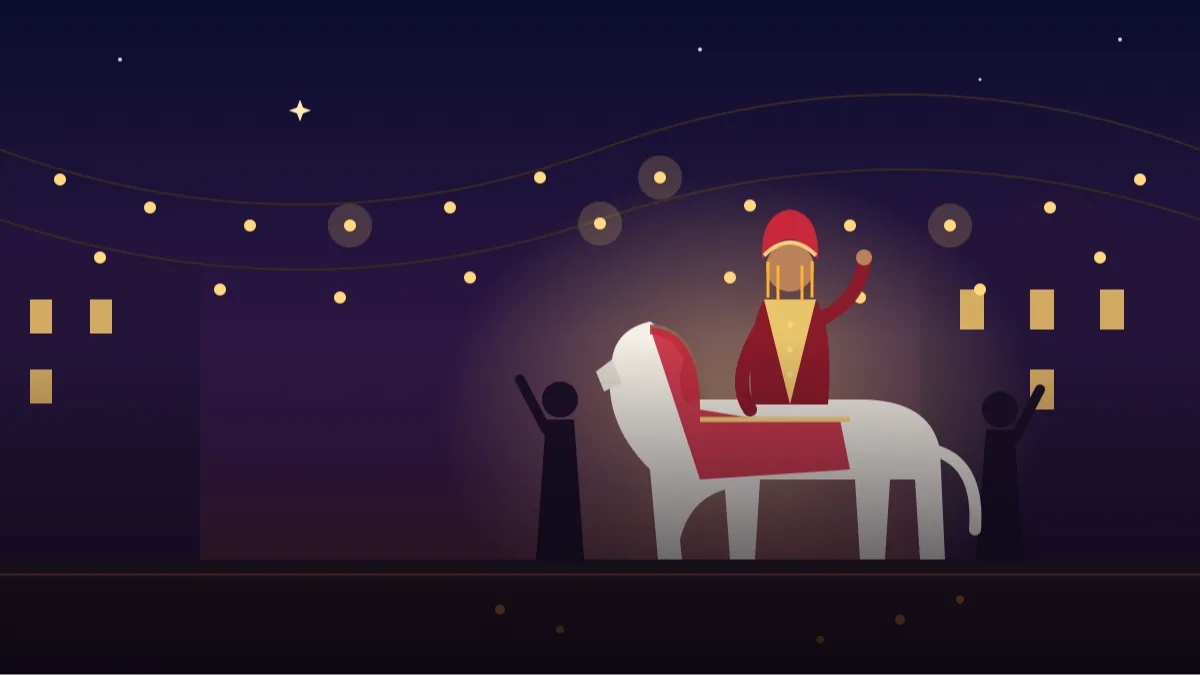
2. Night baraat with fairy lights
Use my attached photo and keep my face unchanged.
SUBJECT: groom walking at the front of a night procession, smiling, one hand lifted in a greeting.
OUTFIT: deep maroon sherwani with gold embroidery, matching safa.
SETTING: street lined with strings of warm fairy lights, blurred dancers behind.
LIGHT: warm street lights, soft glow.
CAMERA: 35mm, shutter slightly slow for light trails, face still sharp.
STYLE: cinematic night wedding photograph.
AVOID: smoke on the face, extra people sharp, text.
Sharp face with motion blur behind gives the real baraat energy. If everything blurs, say 'faster shutter on the groom'.
3. Dhol and dance burst
Use my attached photo and keep my face exactly the same.
SUBJECT: groom dancing in the centre with arms open and a huge laugh, friends dancing around, a dhol player drumming beside him.
OUTFIT: emerald green sherwani with gold buttons, cream safa, white churidar.
SETTING: open lawn at dusk, floral gate behind, colourful petals thrown in the air.
LIGHT: golden hour with warm backlight.
CAMERA: 24mm wide-angle, low angle, energetic framing.
STYLE: joyful candid wedding moment.
AVOID: sharp background faces, alcohol, text.
Throwing petals or confetti adds motion without needing smoke. Keep friends blurred so only your face is clear.
4. Milni garland welcome
Use my attached photo and keep my face unchanged.
SUBJECT: groom smiling politely as an elder from the bride's side places a marigold garland around his neck, elder's face turned away and softly blurred.
OUTFIT: cream sherwani with a gold embroidered border, pastel pink safa.
SETTING: wedding venue gate with flower arch, relatives clapping in a soft blur.
LIGHT: soft warm evening light.
CAMERA: 50mm, eye level, gentle depth of field.
STYLE: warm documentary wedding photograph.
AVOID: crowded sharp faces, text, extra fingers.
Welcome customs differ widely, so use this as a base and rename the moment. The blurred elder avoids an invented stranger's face.
5. Groom with friends walking in
Attach my photo and keep my face exactly unchanged.
SUBJECT: groom walking at the centre with four friends in matching outfits just behind him, all laughing, friends' faces simple and softly blurred.
OUTFIT: groom in sky-blue and gold sherwani; friends in cream kurtas with coloured stoles.
SETTING: palace-style courtyard with arches and marigold garlands.
LIGHT: soft afternoon light.
CAMERA: 35mm, slightly low angle, groom sharp, friends blurred.
STYLE: lively group wedding photograph.
AVOID: duplicate faces, distorted hands, text.
Group faces drift easily, so ask for 'simple, softly blurred friends'. If you want real friends, generate each separately.
6. Close-up safa and sehra detail
Use my attached photo and keep my face unchanged.
SUBJECT: close portrait of the groom with a quiet confident smile, head slightly tilted.
OUTFIT: red and gold safa with brooch and feather, thin flower sehra strings, embroidered sherwani collar, pearl necklace.
SETTING: soft blurred baraat crowd and decor behind.
LIGHT: warm side light with gentle shadow.
CAMERA: 100mm portrait lens, shallow depth of field.
STYLE: rich editorial wedding portrait.
AVOID: plastic skin, changing my face, text.
Closer crops make safa folds and embroidery clearer. Say 'neat tie, even folds' if the turban looks messy.
7. Aerial procession view
Use my attached photo for the groom and keep his face as it is.
SUBJECT: groom in the middle of a wide procession, seen from above, looking up and waving, dancers forming a circle around him.
OUTFIT: royal blue sherwani with gold work, ivory safa.
SETTING: street with floral arches and lanterns, rooftop decor around.
LIGHT: soft early evening glow.
CAMERA: drone-style high angle, wide frame.
STYLE: cinematic, colourful, real-photo look.
AVOID: sharp tiny faces, text, extra distortion.
Drone shots hide the weak spots of AI faces because everyone is small. Keep the groom bright and central.
8. Quiet pre-baraat portrait
Use my attached photo and keep my face exactly the same.
SUBJECT: groom standing alone for a calm portrait before the procession, adjusting his cuff, looking slightly off-camera.
OUTFIT: champagne sherwani with subtle embroidery, soft pink safa, small brooch.
SETTING: hotel corridor with warm lights and a decorated entrance behind.
LIGHT: soft window light from the right.
CAMERA: 85mm, shallow depth of field, eye level.
STYLE: calm, elegant, natural.
AVOID: harsh flash, extra people, text.
This one is perfect for a card or Instagram post. Change the colour to ivory, maroon or sage to match your outfit.
Why should only the groom be sharp in a baraat photo prompt?
Start with one clear photo of your own face, front-facing, with no cap or sunglasses. The more even the light in the source photo, the better the face match.
Paste the prompt as one message. A baraat photo prompt works best when the groom is the only sharp subject. Friends, relatives and musicians should be 'blurred' or 'in the background' so the tool does not try to invent many perfect faces.
- Open a new chat and enable image creation.
- Attach your photo and write 'keep my face exactly unchanged'.
- Paste the prompt and edit colours and the setting.
- If the face drifts, retry with a closer, sharper source photo.
- Save two or three favourites and compare them side by side.
How do I describe the sherwani, safa and sehra so they look real?
The groom's outfit does most of the work. Say the colour, the embroidery and the accessories: 'ivory sherwani with gold thread, red safa with a brooch, pearl necklace, mojari shoes'. For a sherwani groom ai photo, one rich colour and one accent are enough. Too many colours can make the outfit look fake.
Safas can be tricky. Ask for 'neat tie, even folds' and avoid asking for a tall plume or heavy jewellery unless you really want it. Sehra strings are lovely, but they can hide the face, so say 'thin strings lightly framing the face'.
Fabric words help: 'raw silk', 'brocade', 'velvet' for winter weddings. These small details show up as texture in the picture.
Motion blur on the dancers, sharp face on you: getting the baraat energy right
Decide what must be sharp and what can move. 'Face sharp, background blurred' is the simplest way to get that lively look. Mention 'slight motion blur on dancers' to add energy without losing your face.
For a groom on ghodi photo prompt, keep the crop at the waist or knees and ask for a calm horse. Horse legs are one of AI's weak points. For a dhol baraat dance photo ai scene, a low wide-angle lens and petals in the air feel more real than a stiff dance pose.
Use real-world lens words like 35mm or 24mm rather than vague words like 'cinematic masterpiece'.
- Say 'warm golden light' for daytime, 'string lights' for night.
- Ask for 'neutral skin tone' if lights tint the face.
- Keep alcohol, fireworks near people and smoke clouds out of the prompt.
Late afternoon road or night with string lights: which setting suits your sherwani?
Late afternoon light is flattering for sherwanis because gold thread picks it up beautifully. Night baraats look best with warm string lights, not harsh white LEDs, so say 'warm' in the prompt.
Wide roads, palace gates, courtyards and floral arches are all good locations. Keep decor simple. A real baraat is already full of noise and colour, so the AI picture needs a clear focus: the groom.
If the wedding is in winter, ask for 'cool evening haze, warm lights, a light shawl over the sherwani'. For a summer day baraat, skip the shawl and describe 'bright midday sun, deep shadows' only if you are happy with harsh light, otherwise choose early evening. For a palace or heritage venue, say 'old stone gate, brass lamps' without naming the real place; the tool will invent a plausible but wrong building, so keep it as mood, not a claim.
Everyone has the same face and the horse looks odd: common baraat photo prompt problems
A common error is asking for the full crowd with sharp faces. The result looks like a copy-paste of the same face. Ask for blurred background people instead.
Another is a changed face. Put the face instruction at the start of the prompt. If the baraat is for a community that does not use a horse or safa, delete those lines and describe your own entry style. A wedding procession photo prompt is flexible, so keep the structure and replace the details.
Finally, avoid asking for fireworks, sparklers or smoke close to the groom. They often muddy the face and may not suit every venue.
Captions, digital invites and reel covers
Captions can stay playful: 'Dhol on, nerves off', 'Here comes the groom, a little late as always' or 'Baraat mode: ON'. Use the pictures for digital invites, reel covers or a family WhatsApp group.
If you post them, mention they are AI-generated so friends know they are not actual photographs from the day.
For a digital invite, use the quiet pre-baraat portrait with empty space on one side, then type the names, date and venue yourself in a design app. Double-check the spelling and the date twice, because an invite with a wrong date is a much bigger problem than a plain one. For a reel cover, a bold close-up of the safa and sehra works better than a wide crowd, since the cover is tiny in the grid.
Groom, horse, dhol, light: what to check in a finished baraat picture
A baraat has a lot going on, so check the image in layers. Begin with the groom: the face should match your photo, the safa should sit straight on the head with even folds and the sherwani buttons should run in a single clean line. Count the fingers if a hand is raised. Then look at what he is standing, sitting or walking on. A horse should have four legs, a bridle that connects to the mouth and a decorated cloth that follows the body without strange folds.
Move to the background. Dhol players should hold the drum at the waist with a strap and strike with a stick, not float. Blurred dancers should look like soft shapes with warm colours; if any face in the background looks sharp and oddly similar to others, ask for 'all background people turned away or heavily blurred'.
Finally, check the light and the colours. Marigold orange, wedding red and gold are strong colours, and AI can push them into a noisy picture. Ask for 'balanced warm colours, natural skin tone' to keep the face calm in the middle of all that celebration.
Talk to the family before you post a baraat picture
If you are a groom planning to use these for a save-the-date, an invite or a social post, think about where each picture will sit. The quiet pre-baraat portrait suits a card because there is empty space around the face. The ghodi shot suits a vertical reel cover. The aerial view suits a wide banner or a WhatsApp status because the small details do not matter at that size.
Talk to your family before publishing. Some elders may not like their relatives appearing in even blurred AI scenes, or may prefer to keep ceremonial moments private. Respecting that is part of a happy celebration. Also check community customs about attire: some families expect a specific turban style, colour or ornament, and the AI will not know that unless you describe it.
Finally, do not use an AI picture to represent a real baraat you did not have. These are creative portraits and keepsakes. If you share them, label them honestly so nobody mistakes them for photographs from the day.
Turning the night procession into a vertical reel cover
Take Night baraat with fairy lights and make it a 9:16 reel cover. Keep the face line. Change the framing to 'vertical 9:16, groom in the lower two-thirds, empty dark space at the top for a title'. Change the outfit to match yours, perhaps 'bottle green sherwani, cream safa'. Add 'warm fairy lights forming a soft arch above the street'.
Generate and check the light trails: they should be soft lines in the background, not scribbles across your face. If they cross your face, say 'keep all light trails behind the groom, face clear'. Then add your title text, such as a first name and the date, in a design app so the spelling stays correct in your own script.
With two or three variations of the same prompt you can also build a small set for the wedding reel: one portrait, one wide shot and one detail of the safa. Keep the colours consistent and the family will love the matching look.
Frequently Asked Questions
Can I add my friends' faces to a baraat picture?
Better to keep friends blurred. Generate pictures separately with each person's own photo and permission, and never use someone's face without asking.
Why does the horse look strange in my result?
Horse legs and tack are hard for AI. Use a waist-up or knee-level crop, ask for a calm decorated horse and regenerate a few times.
What if our baraat has no horse or dhol?
Just rewrite the SUBJECT and SETTING lines. Replace the horse with a decorated car or a walking entry and describe your own music or silence.
Do I need a special lens word?
No, but 35mm for crowd scenes and 85mm for close portraits give a more natural look than long style words.
Can I use these for a Muslim or Sikh wedding procession?
Yes, as a styling base. Adjust clothes and head coverings to your own tradition and keep the wording respectful.
Final Thoughts
With the right words, a baraat photo prompt gives you the noise, colour and joy of the day in a single frame, while keeping your own face clear and natural. Start with the ghodi portrait or the dhol dance, then try the quiet pre-baraat shot for a calmer mood.
Attach your photo, paste a prompt and try a few versions. If you are also planning the quieter moments around the wedding, wedding photo prompts for haldi and couple portraits cover the quieter moments.
Note: AI image and text results vary by tool, version and settings. Use only your own photos, avoid copying real people’s likeness, and follow the terms of the AI tool you use.